



Author: Sandro Costo
Wreck diving can be divided into three categories:
– external observation
– limited or light-to-light observation
– deep penetration
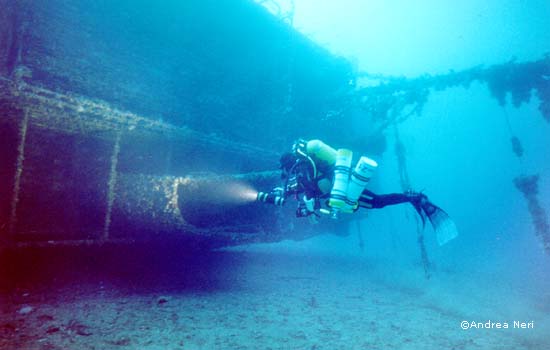
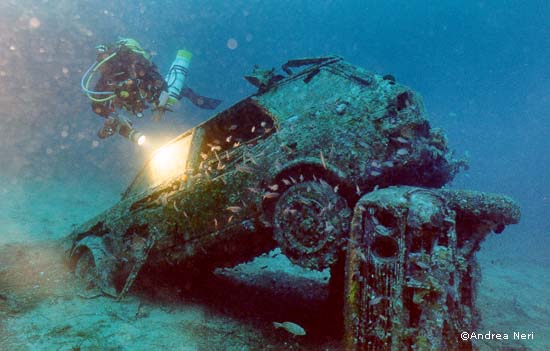
External observation : observing a wreck from the outside is the most common and also the least dangerous activity, although due caution must always be exercised.
Limited penetration and “light to light”Limited and light-to-light penetration are activities that require no special equipment other than common sense and adequate preparation. Light-to-light penetration involves entering one area of the vessel and exiting through another immediately visible opening.
If we're moving around inside a wreck, there are some important considerations to keep in mind: the metal sheets can be very sharp, so they don't work well with BCDs and dry suits! If our regulators have an INT connection, we must be careful to avoid possible impacts to the first stages due to the risk of the O-ring coming off and causing a significant gas leak. Therefore, if we're interested in entering a wreck, it's definitely a good idea to consider purchasing regulators with a DIN connection.
Deep penetrationThis is a whole other matter! If we venture inside a wreck, into areas where sunlight no longer reaches, after having traversed corridors, branches, hatches, or ladders, we undoubtedly need to be thoroughly prepared both technically and mentally.
In this activity, equipment configuration, propulsion type, and methods for finding one's way back must be known and developed to the highest level.