




Author: Laura Vernotico
Together again to begin to understand our bodies and minds in pursuit of optimal athletic performance, especially if we want to improve our diving skills through this great and wonderful world of fitness!
WATCH OUT FOR THOSE TWO: THE LUNGS
Breathing well is the fundamental act, the initial prerequisite of any sporting practice and it is even more so for those who dive.
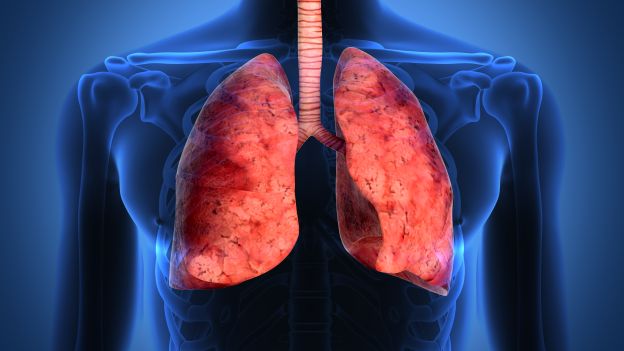
Think of the lungs as two bunches of grapes joined at the top by a single stem (the trachea). (Fig. 1 – Fig. 2)
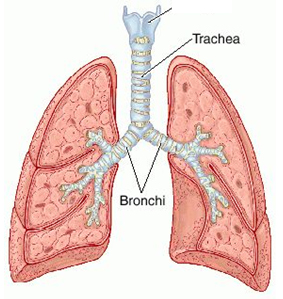
Fig 1
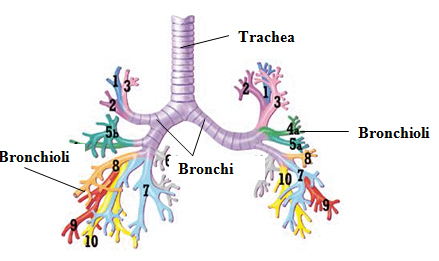
Fig 2
From this stalk, progressively smaller peduncles branch out, which in the lungs are called bronchi and bronchioles. At the end of the bronchioles are the alveoli (the berries of a bunch of grapes). Each alveolus is surrounded by a blood capillary. (Fig. 3)
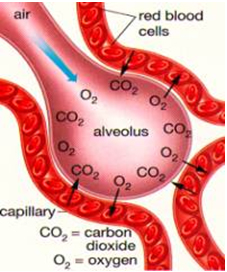
Fig 3
If we opened all the alveoli and stretched them, our lungs would become as big as a tennis court. Of course, physical and muscular performance depends not only on the size of the lungs, but also on how well they function.
So let's try to understand How they work and what breathing is forFirst of all let's say that breathing is divided into two phases: inhalation and exhalationIn one day we breathe a quantity of air corresponding to the litres of water in an Olympic-sized swimming pool measuring 50 m x 25 m x 6 m, or 7.500 m3 / 3.000.000 litres.
When we inhale, air (which contains 21% oxygen) enters the alveoli. Gas exchange occurs in the alveoli: oxygen from the air enters the capillaries to be transported by the bloodstream to all body tissues, and carbon dioxide (and, in divers, all the inert gases in the respiratory mix) passes from the capillaries to the alveoli to be eliminated during exhalation.
The lungs are the organs that limit our performance in the water. Why?
When we dive, the increased ambient pressure pushes on the chest and abdomen, reducing lung expansion. Furthermore, we breathe through a regulator, which doesn't have a continuous flow, but forces us to "pull" air in order to breathe. This underscores the importance of good breathing technique and proper scuba gear.
Leaving the details of the equipment to the experts in the field, let's move on to see how we should breathe to improve our performance.
Dedicating 10/12 minutes to relaxation and breathing techniques before entering the water is essential. two types of breathing: diaphragmatic and thoracic.
The diaphragm is a dome-shaped muscle that separates the abdomen from the chest. When we lower it downward (expanding the belly), it creates space for the lungs. Diaphragmatic breathing is characteristic of men, while women predominantly use thoracic breathing. Athletes instinctively use both.
How can we exercise to get the most out of our lungs?
-
Lie on the floor, completely relaxed, placing one hand on your abdomen and one on your chest to monitor your body. Then inhale slowly and deeply, dividing the breath into two distinct phases.
-
First, inflate your belly by lifting your abdominal muscles, then inflate your chest. Be careful, though: dividing the movement into two phases doesn't mean breaking it into two parts. The movement should be single, continuous, and harmonious.
-
Then move on to exhalation, performed in reverse order: first empty your rib cage, then your abdomen, until it flattens. This ensures optimal ventilation.
For a diver, breathing well not only means improving athletic performance, but also improving inert gas elimination and reducing the risk of decompression sickness.
There are internal or external conditions in our body (smoking, obesity, pathologies such as bronchitis, use of hard regulators, etc.) that reduce the exchange capacity of the lungs and increase the risk of a diving accident.
Bottom line : given the importance of the lungs in scuba diving, don't just breathe passively with your body, but also breathe with your mind. Only in this way can you improve your physical performance and make your dives safer.
Reproduction of the text and photos in this article, even partial, is strictly prohibited.