



Author: Giorgio Mesturini
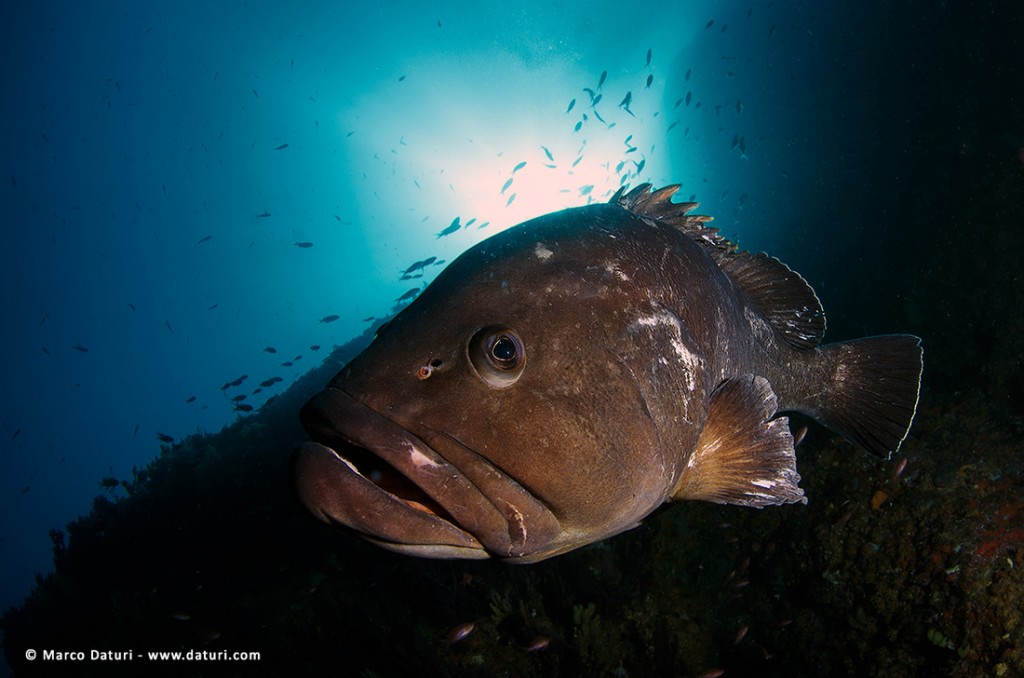
A “sea” of groupers!
Few places in the Mediterranean, like the Medes Islands, offer the opportunity to see such large quantities of fish, which will remind us of the seabeds of the most distant and exotic locations.
 Once you cross the French-Spanish border, it's just a few hours' drive towards Barcelona to reach the Costa Brava, home to one of the most beautiful diving areas in the Mediterranean.
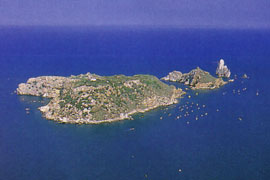
It's Medes Islands, an archipelago made up of a group of islets, the largest of which are Meda Grande and Meda Piccola, followed by numerous other rocks and pinnacles.
The archipelago, located less than a mile from the port of Estartit, is completely uninhabited and surrounded by lush Mediterranean vegetation, which provides an unrivaled habitat for cormorants and seagulls.
Prohibited from any type of construction, today Les Medas represent the most interesting natural area of the entire Costa Brava, so much so that in 1983 it became a Marine and Terrestrial Park.
The islands aren't very high, but the action of wind and waves has eroded them on all sides, shaping them into imposing, sharp sea stacks; only Meda Grande appears more massive, thanks in part to its flat and fairly broad summit, home to the archipelago's only lighthouse.
Beneath the surface of the sea, currents have carved into the soft limestone that forms the entire archipelago, many tunnels, arches, and a vast system of caves. The most spectacular complex is the one that runs from one side of the island of Meda Piccola to the other.
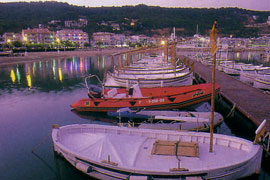
The town of Estartit is the most convenient starting point for reaching and diving the Medes. Until a few decades ago, the village was simply a fishing village, but since 1983, when the park was established and these seabeds became a true paradise for divers from all over Europe, Estartit has quickly transformed into a major tourist destination, home to numerous diving centers, equipped to welcome the thousands of visitors interested in discovering these splendid underwater reefs.
The park's success with the marine environment is evident, and to demonstrate it, simply dive along the coastline north of L'Estartit, a coast not protected by the park's regulations. The contrast between the Medas Seabed and these is stark, not so much in terms of secular life but in terms of the abundance of the fish population, helping us understand how, with wise marine conservation, the seabed can be restored to its former splendor.
THE UNDERWATER WORLD
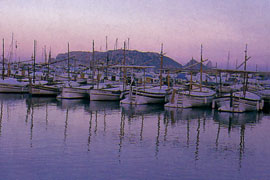 Trips to the Medes Islands start from the nearby port of Estartit, and in just a few minutes by boat you can cross the mile of sea that separates the archipelago from the coast, thus reaching, with the equipped and comfortable diving boats, the numerous dive spots marked by floating buoys.
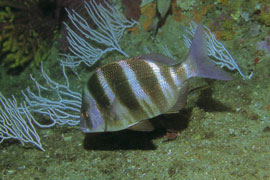
Several features make these seabeds unparalleled in beauty; the most striking is the opportunity to dive among enormous groupers, schools of white bream, black sea bream, sea bass, barracuda, saddled bream, gilt-head bream, and many other fish, swimming along reefs covered with coral colonies and yellow-speckled red gorgonians, which jut out into the blue, offering stunning views.
Another element that characterizes the beauty of these seabeds are the numerous caves, all extremely large, allowing for maximum safety and peace of mind. Here, in the darkness of these spectacular cavities, we'll be astonished by the number of brown meagres present, as well as conger eels, lobsters, crawfish, and the ever-present groupers.
The beauty of diving in the Medas Islands is also the shallow depths at which they typically take place. By staying within a 20-meter depth, we can observe the vast array of marine life these islands offer and preserve on their seabeds.
Excursions and visits:
L'Estartit is also an ideal place for non-divers, as you can spend pleasant days on the long, well-equipped beaches.
Excursions to the Medas Islands are prohibited, but park rangers organize walks on Meda Grande Island on certain days of the week. They will show hikers the island's unique botanical and faunal features, such as the extraordinary seagull colony of more than 8000 pairs!
Taking advantage of a day of rough seas, you can go and discover the numerous medieval villages that surround this stretch of the Costa Brava, such as the beautiful towns of Tossa, Figueraras, Pals and Rosas.
Let's not forget that just 150 kilometers from Estartit we can reach the beautiful and lively city of Barcelona, rich in history and Mediterranean culture.
UNDERWATER
The Hotel les Illes diving center is equipped with two comfortable boats, each approximately 15 meters long, equipped with first aid equipment, a VHF radio, oxygen, and an assistance dinghy. During peak tourist months, up to four consecutive trips are scheduled daily, allowing guests to choose the best time for their dive. Diving courses and equipment rentals are also available.
DIVING
1 – Salpatxot
The dive site is located on the northern side of Meda Grande, and once underwater, we'll follow the eastern side of the small Salpatxot rock, where the first red and yellow gorgonians appear at a depth of 15 meters. Continuing east, large blocks of rock will appear, covered in vibrant coral and rich in crevices, where splendid specimens of white sea bream, brown meagre, and grouper hide. In this area, it's not uncommon to spot dense schools of barracuda and amberjack swimming in the blue. At the end of the dive, before returning to the boat, head to a depth of 5 meters, where the waves foam against the rock. Here, you'll be able to admire numerous sea bass and gilt-head bream, peacefully swimming in the undertow.
2 – Pota de la Pota del Llop
On the western side of Meda Grande you can discover another of the many diving spots in this small underwater paradise.
The seabed slopes gently to the sand at about 40 meters, interspersed around 20 meters by a series of long ridges that appear completely covered with gorgonian fans of the Eunicella cavolinii species and red Paramuricea, which here appear with the tips of their branches streaked with yellow. Schools of white sea bream completely fill entire burrows, which are often shared with large brown meagres. The small caves that open along the walls of the ridges provide support for red coral colonies and also shelter for forkbeards, lobsters, and... groupers.
3 – The Cow
South of Punta de la Galera, which juts out with high rock walls into the open sea, we can dive in one of the most beautiful spots in the Medes Islands. The dive site, called La Vaca, hides a cave deep within its depths, considered by many to be the most beautiful in the archipelago. Indeed, as soon as we begin our descent to the bottom, we'll immediately find ourselves swimming among schools of banded white seabream and clouds of saddled saddled bream. Once we reach a depth of 10 meters, the cave's wide entrance opens up before us. The spectacle is incredible: the play of light from the surface creates splendid reflections on the seabed, while further inside the cave, we'll spot schools of tranquil brown meagres, large banded white seabream, and groupers.
4 – Small Meda
On the southern side of Meda Piccola Island, within a charming inlet, we can discover a very interesting stretch of seabed thanks to the numerous caves that open up here at shallow depths. In fact, the entrances to these large cavities can easily be found at a depth of 15 meters.
Thanks to the numerous large openings that allow constant sunlight to shine into the cave, exploring these cavities is easy and suitable for everyone. Here, with the aid of a spotlight, you can admire schools of brown meagres, consisting of dozens of large specimens, standing motionless before your eyes at distances sometimes less than a meter.
There will be no shortage of groupers, conger eels and splendid specimens of banded white sea bream.
Furthermore, diving in these caves is fantastic also for the suggestive plays of light that are created between the cracks in the rock.
5 – The Ferrenelles
This dive site is located between Meda Piccola and the Tascons rocks. The seabed consists of a series of rocky outcrops and large boulders that descend to a depth of 40 meters, creating a succession of large steps and landslides. This entire stretch of seabed, being the southernmost tip of the archipelago, can occasionally be affected by strong currents, but these act primarily on the surface and less deeply. Beyond 20 meters, the reef appears covered with gorgonians and red coral, but this area's distinctive feature is its ravines, home to numerous curious groupers that will follow us for much of the underwater journey. During the dive, don't forget to look out into the blue sea, as it's possible to spot schools of amberjack, large sea bass, and barracuda.
For information and hotel and diving reservations:
Conventions:
AFFILIATED OPERATORS

Reproduction of the text and photos in this article, even partial, is prohibited without the author's consent.