


Author: Claudio Di Manao
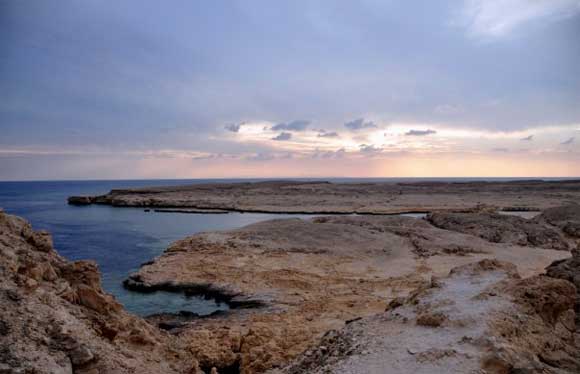
From the window, I can see the edges of the reefs separating the turquoise lagoons from the deepest blue of the open sea. That blue, above and below the surface, is unique to the Red Sea: it's a soft blue, perhaps softened by the ochre of the surrounding desert, by the relentless light of the Sinai Desert. My lips pronounce the names of the reefs without the sound of a voice, like a prayer: Sha'ab Ali, Sha'b Mahmoud, Stingray Station, Shark, and Yolanda Reef. We're about to land in Sharm, and I wonder: what does a reef know about the revolution?
On the traffic-free Peace Road, I notice something has changed: gigantic, useless construction projects. But I want to see my friends, those who stayed behind, I want to hear their stories, looking them in the face, I want to see that sea that from above makes you want to dive out of the plane in mid-flight. They, my friends, experienced the revolution on Al Jazeera. They're angry with the lies written in the newspapers: tanks never entered Sharm el-Sheikh. They can't enter: the army needs clearance from Israel. Some are surprised by the looting of supermarkets and some armed robberies of gas stations. I'm shocked: in a country that has been without a police force for months... They don't understand that even in Switzerland, worse things happen, and it's considered an extremely safe country. And in Switzerland, the police are always there. Some seem to live in an enchanted world that, for a few moments, was no longer theirs, it became too similar to the real world. Others, however, are realists, looking to the future, to the elections, to the uncertainties of September: the past is already gone, like the present... the very moment you talk about it.
There are no people, but we're holding on, we're holding on, many tell me. I admire their courage. The diving centers that have managed to nurture a loyal clientele, a clientele of loyal, passionate divers, the repeaters, are still afloat. Those who relied on the mass of hotel guests, or on price wars, have lost their bet. The hotels are half-empty, as are the shops, the little bars, and the restaurants along the Naama Bay promenade. Those who can afford it are dedicating themselves to maintenance and renovations. It's May, but it feels like January without even the Russians, without the Germans.
The people of Sharm feel betrayed. They feel betrayed by the press, by tour operators, by unjustified fears: if the killer shark has deterred families and the average vacationer, it has also attracted expert divers. But no one can understand the price of a revolution that hasn't even touched Sharm.
There were demonstrations, even attended by foreign residents. It was a moment of unity. Then there was a demonstration against the foreign instructors. Some complained about a certain hostility from the locals, but ultimately, anyone in Egypt today can express their opinions without being persecuted. Before, you should have been careful. I ask Fred if he wants to see his name published as the author of the photos of the shark nets. A few months ago, he would have said no, he would have been afraid, he would have given them to me under the table and for free, now he wants the benefits of his work. Before, I would have sent certain news from a convenient email address set up at an internet café and never from my PC. Today, Al Masry Alyoum (an independent newspaper) is slamming the Governor of South Sinai for repealing a decree prohibiting traditional fishing in Ras Mohammed National Park, and I can afford to write whatever I want from my address, first and last name. Today, the decree was repealed less than a week after the newspapers, HEPCA, CDWS, and thanks to a petition. Would we Sharmans have ever imagined it before? Never. And I remember the arguments over censorship when I wrote for various magazines, about the environment. I was an 'Eco Warrior' on Mix-Mag. I remember the quiet battles, my texts distorted when the editorial staff should have used a box, and they told me: it's for your own good. I remember the police looking for me, following two complaints for Sons of a… Shamandura. It always ended in a happy ending, but I was a foreigner, an untouchable. I know I no longer have certain privileges, but the censorship seems to have dissipated. Anyone can afford to mention the names of Mubarak and the Governor in a public place, without risking disappearance. Today, they laugh about it, and send emails against the Governor, who backtracks.
Everyday life continues as before, no more, no less. You wonder how much heroism it takes to stay afloat, to keep a business open with so few people. It's love. The malicious would talk about laundered money. There are some in Egypt, but the love is visible. I see it. Unfortunately, most people check the price list and judge only by that.
But let's get back to my first question: what does a reef know about revolution?
She knows that with fewer people in the water and fewer boats and suntan lotions around, she can breathe. At Shark Reef, I encounter a maximum of four groups of divers, tiny groups, wandering around at will. On the Jackfish Alley plateau, it was just us: six divers in total, two groups of three. I forgot: dolphins, sharks, turtles, eagle rays... last week there were manta rays, then they disappeared. Some people have the nerve to complain about the disappearance of the manta rays, as if the sea didn't follow cycles. On the boat, the service is outstanding: there are ten of us, with the boat all to ourselves, and the guide listens to our various needs and our "strange" requests, stress-free. The crew obeys, maneuvers, and moves without question. I wonder how they manage to keep up this high standard. Courage. It takes a courage that the press, tour operators, and the public continue to betray. Perhaps it's the fault of Italians' terrible grasp of geography, some say: Libyans, Syrians, and Egyptians... they're the ones over there, the ones who live more or less in that area and do those things. The bunch over there, the Arabs, Bin Laden's relatives.
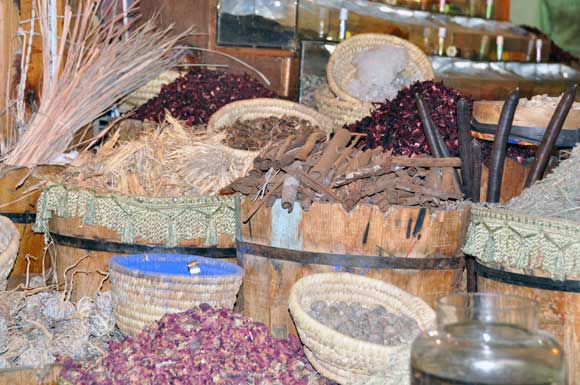
We wander around Old Market (Old Sharm) with a video camera as good as the fruit shop on the corner, but there's no sense of threat or danger: no one flashes the light, no one nudges a friend, no one stares at you. And yet, I know, they're all tightening their belts. And badly.
I want to see a sage, a guru with his finger on the pulse. I go to Dr. Adel Taher, at the hyperbaric chamber in Sharm. He and Dr. Ahmed show me a brand-new hyperbaric chamber. It's a kind of space shuttle, a 12-seater technological deity, just set up. Obviously, it's stationary. Seeing it is like a Space Odyssey, when the Discovery module materializes in a stark white room. It costs almost a million euros, says Ahmed. Naturally, tea and coffee are served in front of the old hyperbaric chamber, that nice iron tube covered in stickers, with manuals, paperwork, and tables instead of monitors and joysticks, the one with the analog pressure gauges. How many hours have you done in here, Ahmed? At least three thousand, he replies. Adel makes tea and asks how much sugar and if I want the sugar sachet in my cup. Adel caresses the "old" one: more than ten thousand treatments, he says. Every hyperbaric chamber is like a woman: it takes a while to understand her, to understand how she reacts and what she can do, she has to be indulged... it's really a question of feeling. I understand that he feels like he's betraying the "old lady," whom he knows well; it's a bond I share. My few hours in there as a tender aren't worth his, but the Made in Germany space shuttle fascinates and scares me. I realize it's a symptom of senile age. I move on. There's a crisis, Adel and Ahmed tell me, but the sea has returned to its old ways: we finally have time to dive, it's beautiful, every cloud has a silver lining. I give Adel a pass for a joke about the Governor of South Sinai: the shark trained by the Mossad. He laughs. I tell him the world thought it was a joke. Me too... Adel replies. Then he says: I know him, he's not even evil, it's just that every now and then... he says absurd things, but in the end he thinks better of it. Wise Adel serves me tea without a teabag. Welcome home, he says... Did you put the keys to your new house on the keychain I gave you on the day you left? Yes. It was a wish for my new life. Then he says: I danced with a manta ray in Marsa Bareika the day before yesterday. We sip the hot tea, without a teabag, in the total silence of Sharm el-Sheikh. Outside, the bright light I love forces me to wear sunglasses. It's the day before the Governor's ban on fishing in Ras Mohammed.