





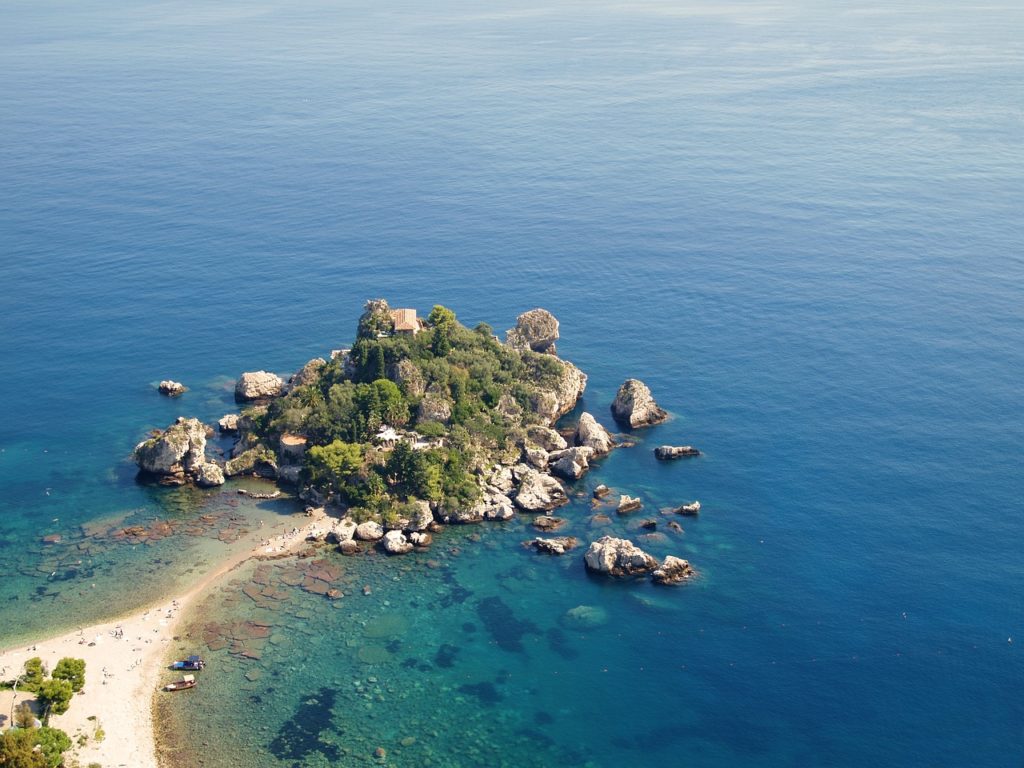
A tourist vacationing in Taormina died after becoming ill at sea near Isola Bella. The woman, Liliana Cavallaro, 63, from Turin, was scuba diving in the sea of the Isola Bella Nature Reserve with a group led by an instructor from a specialized school.
She suddenly felt ill upon resurfacing, where she was rescued by her companions and then quickly taken to the San Vincenzo hospital in Taormina, where she arrived in serious condition. Doctors attempted to save her, but she died a few hours later. Some media outlets indicate the cause of death as pulmonary embolism (or arterial gas embolism), which could have been caused by a sudden blow to the ball without exhaling. However, we are awaiting a detailed reconstruction of the facts for the exact causes.








7 comments on "Turin diver dies in Taormina"
The consequence of a “non-expiring balloon kick” as defined in this article may cause lung overdistention and not pulmonary embolism as reported.
Embolism can occur following an incorrect desaturation of nitrogen in the blood, which, upon re-emerging, can embolize in various tissues and depending on the location of the embolus, the type of embolism and consequently also its level of severity is defined.
Perhaps we should have written arterial gas embolism. From Wikipedia:
Arterial gas embolism (AGE) is a serious decompression illness that a diver can experience, manifested by the presence of gas bubbles within the bloodstream.
Cause
The main cause of AGE is extreme lung over-distension, which can cause lung tissue tears, allowing gas emboli to enter the arterial circulation. Therefore, AGE is typically a sign of failure to follow safety guidelines while diving, such as ascending too quickly beyond the safe rate of 9–10 meters per minute, or stopping breathing during ascent, particularly during the last few meters before the surface, and the resulting expansion of the air in the lungs as the pressure drops.
An excessively rapid ascent to the surface is called, in the most serious cases, a balloon ascent. This is because when such accidents occur while diving with scuba gear, the diver emerges to the surface with his rubber suit fully inflated, similar to a balloon.
Well done Massimo, in the previous comment you confused embolism (DCS) with AGE and probably the author is not a diver, given that the consequences of pulmonary overdistension are studied in the open water course.
However, we all agree that an ascent without exhaling causes pulmonary over-distension with consequent ega and not a pulmonary embolism... regardless of everything... RIP to one of our diving buddies
EGA problem??? I wonder where the partner (or) and the instructor (experts?????)
All great, highly experienced professors… Like when the national team loses and everyone becomes an expert coach. The only thing that's certain, unfortunately, is that one person is… Dead.
As we know, every dive is different from the others, even on the same site.
It seems pointless to argue about whether it was EGA, DCS, or something else, given that we only have information gleaned from a newspaper article, perhaps written by someone who knows little about diving.
This time the accident involved a person who WAS—and you can imagine how difficult it is to write WAS—not only a friend, but also an expert diver and Federal Instructor with all the knowledge necessary to manage possible emergencies and who approached our sport always keeping the values of SAFETY and mutual enjoyment in mind.
For these reasons, an ascent while free-diving without breathing seems unlikely to me, unless it is dependent on external causes.
I would also wait to blame the companion or the companion/instructor, without having information on the actual dynamics.
Unfortunately, as Marco wrote, a person has passed away, one of us, who gave so much and who still had so much to give.
Happy bubbles to all
Comments are closed.