



Author: Francesco Cecconi
The first comparison that comes to mind is that of an extreme sports car: priceless sensations, unrepeatable experiences but at the end of the ride a terrible backache!
And yes, because that's exactly what you'll feel at the end of your vacation in Los Roques.
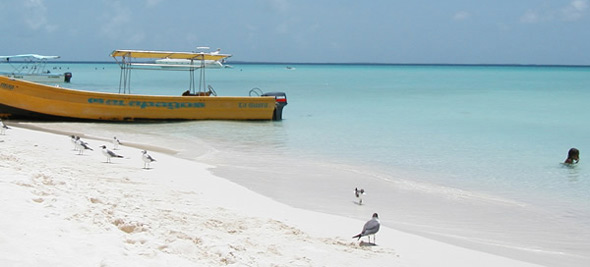
Los Roques has been a protected marine park in Venezuela since 1972 (there are 200 others throughout the country). It is an archipelago of stunning islands, only one of which, Gran Roque, is inhabited by indigenous people and workers recruited in Caracas.
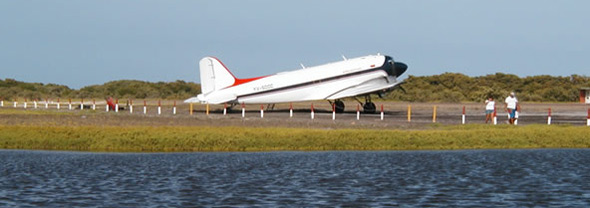
Gran Roque is a 40-minute flight from Caracas. This flight is operated by local airlines, often with dilapidated planes (including a legendary Dakota), departing from the domestic airport regularly. Be careful with your baggage, though: anything over 10 kilos costs $1 per kilo, and if extremely heavy, your bags risk being left behind. During the flight, you'll admire the coral reef and all the small islands that make up the archipelago, a breathtaking panorama that will have you itching to dive into the blue.
Once we arrive on the island, our first impressions are mixed: the typical Caribbean humidity is noticeable, and the smell of the lagoon... too! But these are minor details, we're not young ladies...
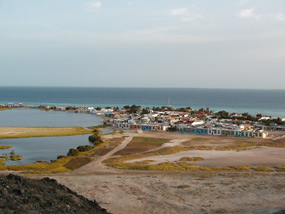
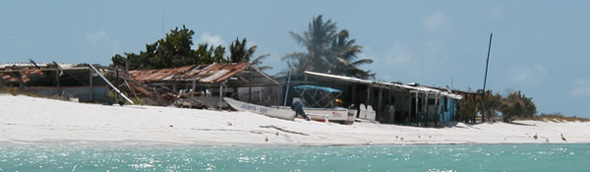
The first image that Los Roques will give you is that of a shanty town. In fact, the Posadas, the typical fishermen's houses now converted to accommodate tourists, are varied, colorful, a little ramshackle and more or less at the limit of livability.
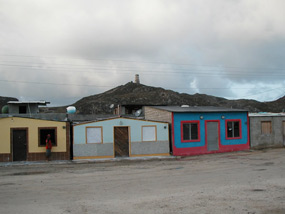
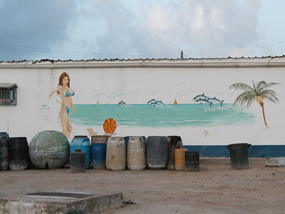
Among these, some are luxury-category: this means they have hot water, air conditioning (often out of order), and a ceiling fan. The medium-category rooms (the majority) have only cold running water and, sometimes, a fan.
As for the standard category... they don't have water, but they do have barrels to wash in! Yes, you read that right, so if you want a decent vacation, dig into your wallet and book at least a medium category.
Currently, from talking to other tourists and hearing their stories, the luxury inns are Natura Viva, Galapagos, Malibu, and Mediterraneo, all Italian-run, serving Italian and local cuisine. Regardless of the category, don't expect to be alone in your room: ants, cockroaches, mosquitoes, geckos, and other cute animals will keep you company. Baigons and similar insects are of little use, even if they do limit the nuisance.
You'll be told to only bring flip-flops because the streets are made of very fine sand... but where??? Personally, I would have appreciated a pair of lightweight moccasins to navigate puddles of dirty water, dog poop, garbage, and phlegm, a favorite pastime of the locals.
A typical day in Los Roques
A typical day starts early, with the first flight at 8 a.m. waking you up, but well before then, the light, the parrots, and all the birds on the island will have greeted you. It's impossible to snuggle up in bed; the island's noises will soon make you long for the sounds of any Western city.
After breakfast, we set off for the pier, where numerous boats take tourists to the islands for a day on the beach. Generally, all the inns have their own boats, which are used to transport tourists to the archipelago's only two "free" islands: Madrisqui and Francisqui. Both are very pretty, but they can feel a bit like you're in Rimini, as most "all-inclusive" tourists don't like shelling out extra money to visit more attractive islands. A big mistake.
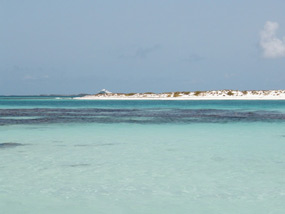
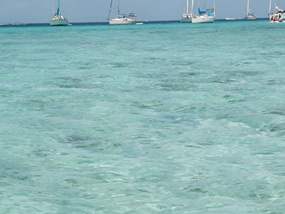
The other islands are like something out of a movie! If only your girlfriend, beautiful as she is, wasn't Brooke Shields, you'd feel like you were on the set of Blue Lagoon. The sea has multiple colors, better than the somewhat monochromatic Maldives, the water temperature is 28/30 degrees, the sand is coral and therefore not hot. There are countless pieces of coral that wash ashore, which is incredible, while the shells weigh kilos and are as big as books! There are so many that they are used to mark paths, boundaries, and common areas.
In the square in Gran Roque there is even a Christmas tree made with them.
Returning to excursions... among the most beautiful islands are Crasqui, Sarqui, Caio de Agua, and Caio Luna, all reachable by paid boats, $10-15 return. Be careful which boats you choose; many are old and lack breakwaters. A shower is guaranteed. Arriving on the island after a 30-minute boat ride and buckets of salty water splashed in your face isn't relaxing.
Once you arrive on the islands, you can spend your day in the company of your cava, the refrigerated container that the inns offer their customers, which contains water, Pepsi, and ice.
If your itinerary is far away, you will also bring lunch with you, otherwise a boat will bring it to you around 13 pm directly under your umbrella. (This service is offered by the more "luxurious" Posadas.)
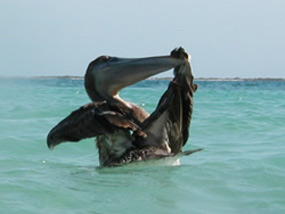
In addition to the quarry, your stay on the island will be enlivened by the presence of dozens and dozens of beautiful and hilarious pelicans, who will dive into the water in search of food and then take flight again with their enormous wings. Lunch will always be admired, eagerly awaiting a treat, by the seagulls, now trained to pick food from your hands.
Unfortunately, the return trip is very early in the afternoon. You can choose between 15, 16, or 17 pm, so you'll miss out on the late afternoon, the best time on the beach.
Be careful of the sun, getting burned is easier than it seems and the light is absolutely blinding.
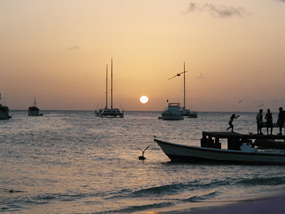
Once you're back after a nice shower, you can stop by the town shops to spend a few Bolivares, or sip an aperitif while watching the sunset. In the evening, after dinner, there's little to do; a few bars offer decent cocktails and local music.
The Dives
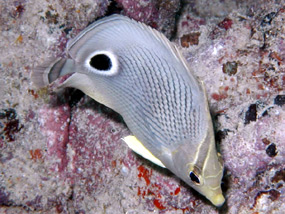
For diving enthusiasts, Los Roques is certainly an interesting destination for the variety and abundance of fish and coral. If you've already visited the Red Sea and the Maldives, you'll be satisfied but never amazed; in fact, the diving is similar to that in the Maldives and less "colorful" than that in the Red Sea.
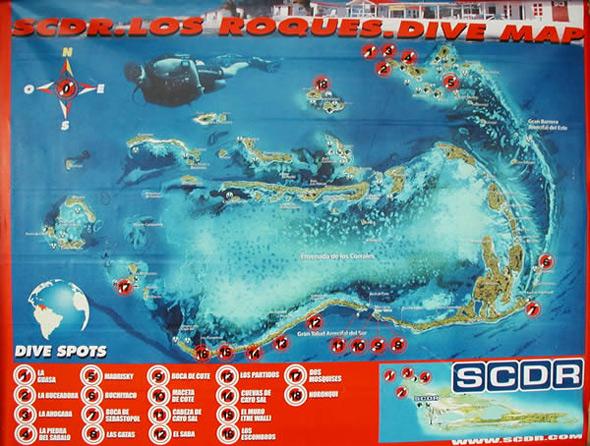
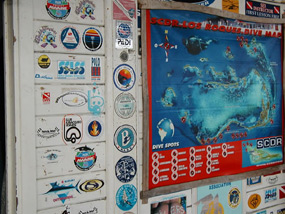
There are four diving centers on the island, two of which I personally tested (Acquatic Diving Center and Sesto Continente Diving Center), with the other two being ruled out purely for aesthetic reasons. Dives cost $35 for a single dive and $65 for a full day, including two dives and personal equipment. Otherwise, the price increases to $45 and $85, respectively.
My heartfelt advice is to bring your own regulators, laptops, and BCDs, as the state of diving equipment is truly embarrassing. I've seen divers lose air from their tank, first stage, BCD, and reserve regulator all at once, running out of air in 20 minutes flat!
The tanks are 15-liter aluminum with an internal connection. Only Sesto Continente diving center offers nitrox.
Typically, tank pressure is 190 bar, and the air tastes good—no post-dive headaches. If you don't have a pressure gauge or personal computer, get used to using psi (200 bar = 3000 psi).
The diving boats are similar and comfortable, Sesto Continente has a larger boat for full-day trips with some shade.
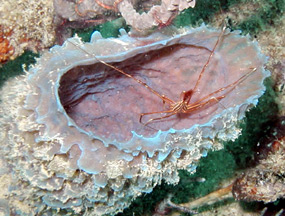
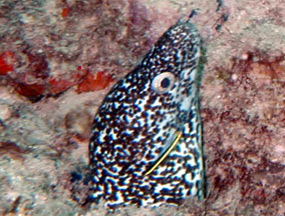
The dives are numerous but similar, and the depths never exceed 33 meters. Currents are sometimes strong, and you often descend without a rope. The best full-day dives are all those on the reef, especially those at Boca de Cote, where it's quite common to encounter nurse sharks.
The dive center staff only speaks Spanish and a little English, but they understand Italian: it's impossible to converse with them without switching between at least two languages along the way! Night dives are special, but the torches provided don't allow you to fully enjoy the dives.
Given the limited maximum depths, all the diving suits currently on the market with the most common digital cameras are ideal.
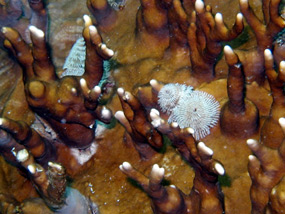
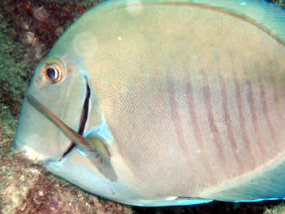
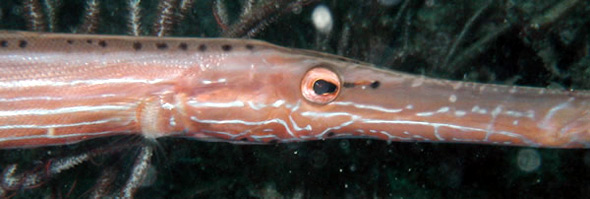
Once in the water, the excitement is unparalleled. It's difficult to find completely bare areas without fish. The parrotfish are numerous and wary, though less colorful than those seen in the Maldives. The corals are plentiful and colorful. The fish usually let you follow and catch them, and they don't run away at the first bubble (see video). The currents allow you to comfortably drift back from the dive, making the second part of the dive even more relaxing.
The coin
This is a particular topic in Los Roques, so I advise you to pay close attention to what you read.
The official currency of Venezuela is the bolivar, which at the official exchange rate is: 1 dollar = 1920 bolivars. Never exchange dollars or euros at the bank.
Yes, you read that right: never change money at a bank or official counter, as you could lose a lot of money.
In effect, Venezuela is under a dictatorship that imposes a fixed, global exchange rate.
My advice is to arrive with US dollars and, in Caracas, change some of them at the black market (ask the taxi driver to do it for you), maybe just 100, just because you're tired from the trip. You should end up with about 240.000 Bolivares (1 dollar = 2400 Bolivares), not 192.000 as if you had changed money at the bank.
Part of this money will be used to pay the Los Roques park tax upon arrival on the island and the extra kilos of luggage (I want to see if you can stay within 10 kilos...).
Depending on the agreement with your tour operator, you may have to pay for the internal flight ($150), but in this case dollars are more widely accepted.
Now the big problem arises at the posada: even if, to make themselves look good, the owners have told you that they accept credit cards, at the end of the holiday they can ask you to settle the bill in cash and in dollars.
This happens precisely for the reason I explained earlier: black market exchange. Often, the owners of the inns will change your money black market as a favor, and then, if you want to pay for the extras with your leftover bolivares, the same owner will demand payment with black market exchange. However, some crafty customers won't stand for this and demand the official exchange rate after having benefited from black market exchange rates throughout their vacation. Therefore, to avoid unpleasant arguments, everyone demands payment in dollars and not via credit card, which must have inexplicably broken.
All in all, the owners of the inns are right:
eg.
– Posada changes 100 dollars per customer in black = 240.000 bolivares OK
– Customer pays bill of 100 dollars in bolivares = 240.000 OK
– Customer pays bill of $100 in dollars OK
– Customer demands to pay bill of 100 dollars in bolivares with official exchange rate or by credit card (therefore official exchange rate) = 192.000 NO HECK!!!
Solution:
Bring a good amount of dollars with you, some to change on the black market and some to pay your bill.
Pay in shops, restaurants and souvenirs with bolivares and pay where possible by credit card (for example diving).
Must bring.
Aside from your camera and the like, I strongly recommend you bring along a fair amount of medicines for:
– dysentery, sunstroke, sunburn, fever, vomiting, stomach ache.
Never drink drinks with ice, or you'll end up spending three nights in the cup (Oil teaches us). Check that the bottles are actually closed: many appear to be closed, but the cap unscrews along with the safety crown.
Wear very high protection, it is very easy to get burned.
For girls, a thong is a must! Yes, you read that right! You're in the country with the highest rate of women with plastic surgery, but unlike in Italy, it's very noticeable. Showing your butt is as normal for Venezuelans as showing your breasts in Italy. Cover-up swimsuits aren't available for them; what's the point with the sculpted bodies many of them have? In stores, if you ask for a women's swimsuit, they'll offer you a nice backside dental floss! Even those who can't afford it can show off their butts without a problem! You'll see some beautiful ones!
Conclusions.
Based on my experience, I can say that Los Roques is not as enchanting as, for example, the Maldives.
Some of the obstacles and difficulties encountered on the island contribute to making the holiday less unforgettable.
It goes without saying that to fully enjoy Los Roques, you shouldn't linger too long in the inns, where life often becomes complicated and very uncomfortable. Instead, you should rent a boat and wander the sea, returning to the mainland every three or four days to stock up on supplies or go out for dinner. Modern catamarans will let you discover every corner of this heavenly archipelago with the convenience of being able to reach the islands' shores with a shallow draft.
If the sea isn't your thing, or you're looking for a diving-beach-bed-and-board vacation, budget for some extra day trips to the islands. It's worth it, and you'll enjoy a space all to yourself where you can feel alone on a deserted island.
Reproduction of the text and photos in this article, even partial, is strictly prohibited without the author's consent.