




Between December and April each year, approximately 5.000 whales migrate from the Arctic Ocean through the Bering Strait along the coast of Baja California.
But where do they come from and why do these whales undertake one of the longest migrations known to nature?
Baja California is home to a remarkable 30% of the 80 existing cetacean species. This is a truly astonishing figure, especially considering the presence of the only endemic species of this order of marine mammals known in the world: the small Gulf of California harbor porpoise ( Phocoena sinus ). Unfortunately, this small odontocete, measuring just one and a half meters in length, is estimated to have only about twenty individuals remaining, and we'll explain why in another article.
So, evidently, if we find so many species of dolphins and whales, it's a true paradise for cetaceans. The conditions are indeed ideal for several factors: little ship traffic, waters rich in food with large plots of plankton, and schools of millions of sardines, fewer natural predators than elsewhere. But that's not all.
The largest of the three main migratory species that visit the coasts of the Bay of Biscay is the gray whale, Eschrichtius robustus , as catalogued in 1860 by the Swiss zoologist Lilljeborg due to its rather slender silhouette. The gray whale is a mysticete cetacean, meaning it has baleen plates of keratin that act like a net in its mouth, retaining food while allowing water to escape. As an adult, it reaches 12 meters in length and weighs 30 tons, equal to six elephants, or 400 people.
These whales embark on an eight-week, nonstop journey every October, covering, in some cases, a distance of over 10.000 km. Let's see what the most likely reasons are.
First reason: Whales come here to breed or mate, in alternate years. During these two phases of significant caloric loss and increased energy needs, the waters of Baja California, which remain at around 19-20 degrees Celsius (66-68 degrees Fahrenheit) compared to the frigid 5 degrees Celsius (41 degrees Fahrenheit) of their home areas, guarantee considerable energy savings and allow for greater physical endurance. In fact, during their stay in Baja, whales are rarely seen feeding, as they don't need to produce much body heat. Most will lose over 20% of their weight in just four months, even more for nursing mothers. Newborns, on the other hand, will gain approximately 90 kg per day for the first eight weeks of life, feeding on some of the fattiest milk known to nature, with approximately 50% fatty acids.
Second reason: at birth, fin whales are negatively buoyant, meaning they would struggle to stay afloat in open waters, posing a high risk of mortality. The high salinity of the water in the lagoons where they are born, however, facilitates their breathing at the surface, greatly increasing the species' survival rate.
Third reason: the main predators of fin whales, namely orcas and large sharks, do not enter the Pacific lagoons. If whales did not take refuge in these shallow, protected bays to give birth, the calving season would turn into a veritable slaughter in their waters, primarily carried out by orcas, a species that already demonstrates its familiarity with the seasonal movements of sea lions, otters, and mobula sharks, which they habitually feed on.
Hypotheses, rather than reasons, but three scientifically very sensible hypotheses.
The presence of whales has been so constant and certain throughout history that in the second half of the 1800th century, a Boston whaler named Charles Melville Scammon sailed 20.000 km one way, around Cape Horn, to hunt them all the way to Baja. He wrote in his journal that it was " ...as easy as shooting fish in a barrel ." He returned to Massachusetts each spring with hundreds of barrels of oil, which were used to light the streets of Boston and New York and as a lubricating oil for the first nascent industries.
Today, as I drive along the beautiful salt flats that, for 70 kilometers, stretch from the Vizcaino Desert to the shores of San Ignacio Lagoon, I still imagine the rancid stench of dozens of whale carcasses, stripped of their thick blubber, left to rot in the sun. There's a specific place here where this carnage took place, where fires burned day and night under barrels of blubber to melt it and turn it into oil. It's called "La Freidora," the fryer.
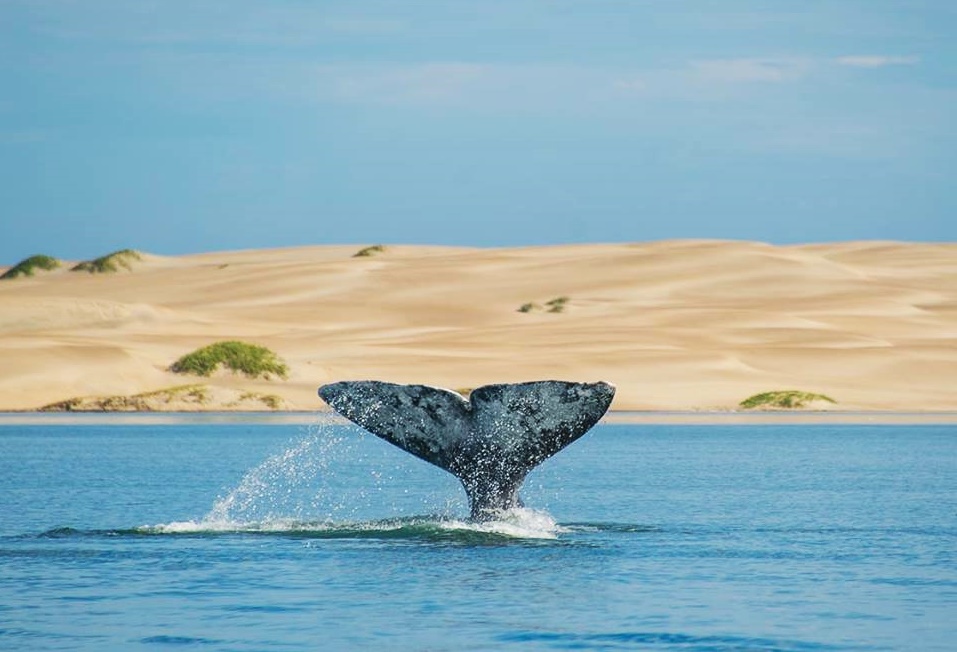
But after 10 years of hunting, the whale population in the lagoons of Bahia Magdalena, San Ignacio, and Ojo de Liebre had almost disappeared, and Scammons fortunately never returned to Baja California. The increase in births gradually resumed, up to the present day.
Today, during the first two weeks of March, when the highest number of adults and calves is recorded, approximately 120 whales are counted in the small San Ignacio Lagoon and another 3.000 distributed across the other two immense lagoons. This is also thanks to the Mexican government, which was among the first in the world to definitively ban whaling in 1946.
Curiously, however, Scammons's work produced, with the publication of his book The Marine Mammals of the Northwestern Coast of North America , the first scientific text describing the anatomy, biology, and behavior of whales. The dissection of carcasses allowed us to uncover the first secrets of these animals, which remain so mysterious even today, and remains among the most interesting texts in the entire available literature.
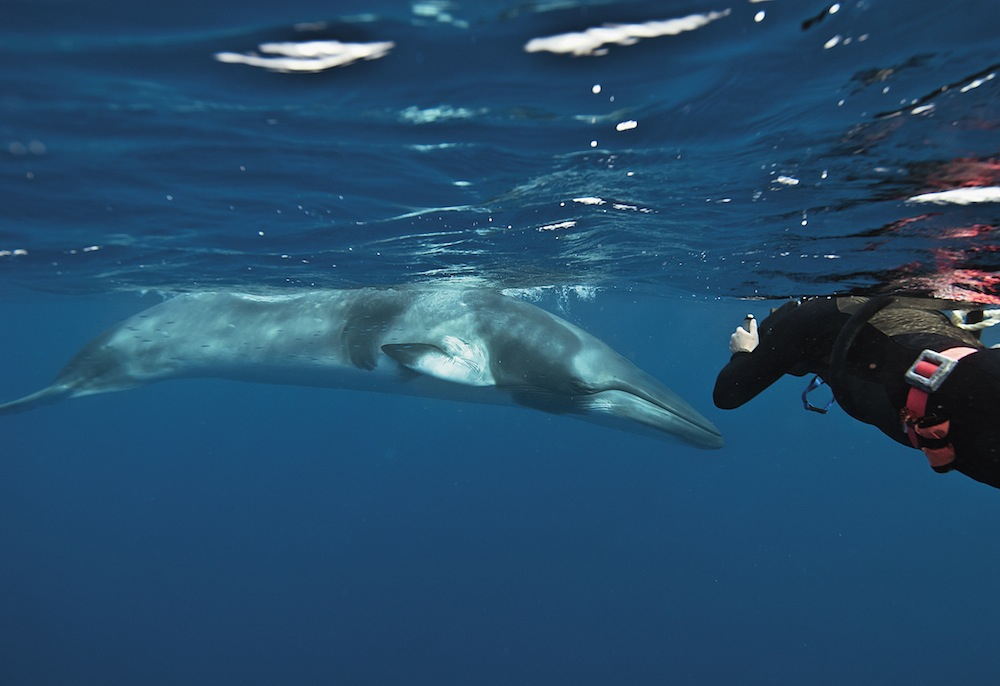
Scuba diving in lagoons requires a special permit, a laborious process with uncertain outcomes. It's easier if the divers are well-known documentary production companies or professional photographers with proven skills.
But diving into the cold, murky waters of the Lagoons certainly doesn't offer the same thrills you get from seeing whales from the surface.
The harmless presence of humans in these waters over the past 75 years has led the whales to fully trust the fishermen. Years ago, in San Ignacio, I met Pachico Mayoral, a local fisherman considered the first to experience direct contact with a whale. It happened in the mid-70s. Pachico was hauling fish from aboard his traps when, at the stern of his boat, a large gray whale emerged with its head out of the water and slowly rested on the side, causing the vessel to list dangerously. Pachico hesitated before the enormous whale, saw it looking at him, approached, and slowly caressed it. The whale lingered, submerged, resurfaced, and sought contact more and more frequently and with increasing trust. When he returned in the following days, the strange behavior was repeated punctually. The whale sought him out. And he welcomed it.
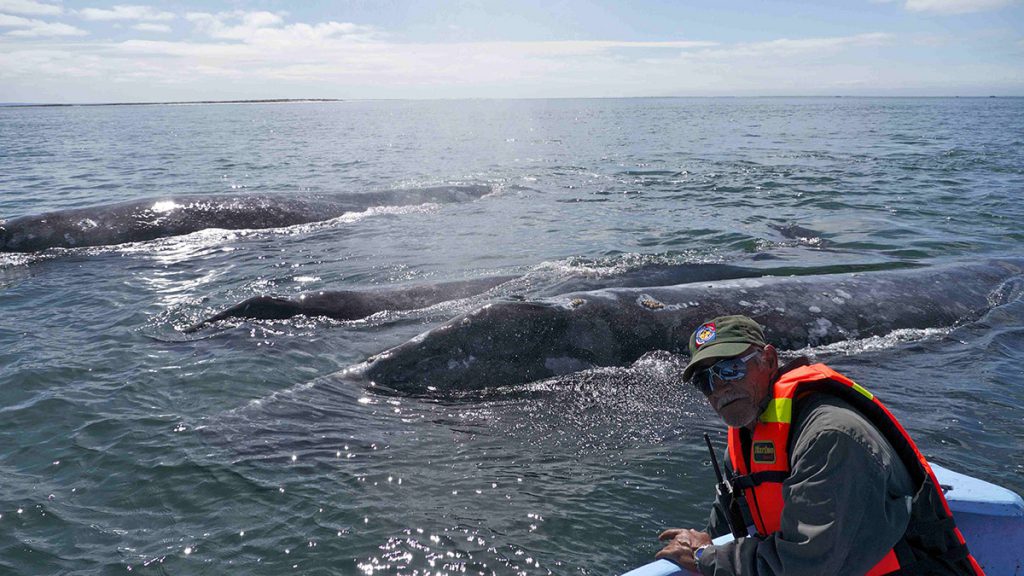
Pachico Mayoral doesn't know it yet, but that day marks the beginning of a dynamic that has for 40 years been a healthy source of income for all the fishermen in the Southern California lagoons, who cease fishing in the winter and turn to tourism. Today, they are required to attend an annual federal course to learn and refresh basic knowledge about the species, and they are issued a certification to prevent unauthorized individuals from disturbing the whales. Another laudable example of economic income through conservation.
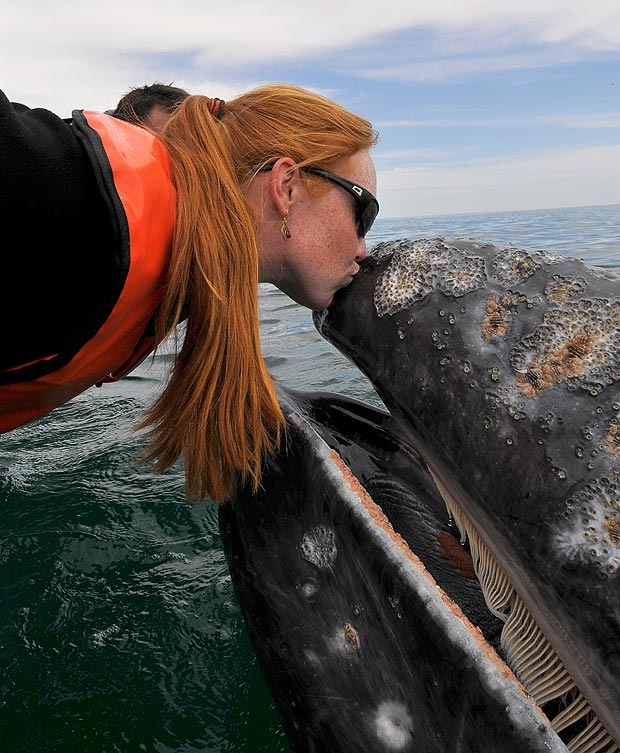
Today, this incredible event has become so common that whales, once they give birth to their calves and within the first 4-5 weeks of their lives, nuzzle their calves close to boats so they can familiarize themselves with this friendly presence in the early stages of their lives. In nature, this behavior is called imprinting , and in this case, it's about introducing friends, not dangers.
At San Ignacio Lagoon, my favorite and the one where I feel at home, we arrive in the afternoon with a car covered in mud and salt and sleep in a tented camp a few meters from the beach. Ferdinando smiles to greet me, we hug tightly and give each other a loud pat on the left shoulder, as is the custom here. I've been coming here for 10 years and have brought at least 400 travelers with me. His face is a map, we talk as if we'd seen each other the day before, but a year or more has passed. We sit looking out at the sea, which resembles a lake, and he updates me, speaking in a low voice, on the number of whales, news from the camp, local stories, and the next day's weather. Then, when the sky turns a dark cobalt, as it does away from light sources, the stars appear and we turn up our collars. In the Pacific in winter, the evening temperature drops to 12 degrees. So we enter the warm wooden dining room; the aroma of good seafood wafts through the air, and there are plenty of cameras on the tables. There's a great atmosphere. The camp is frequented every winter by documentary filmmakers and marine biologists from around the world, who gather here to study gray whales in optimal conditions for close-up. Scholars and photographers chat with the 20 visitors allowed. It's the best place in the world to get up close to whales. When we're here, my small groups and I take at least two boat trips to admire these gentle giants of the sea.
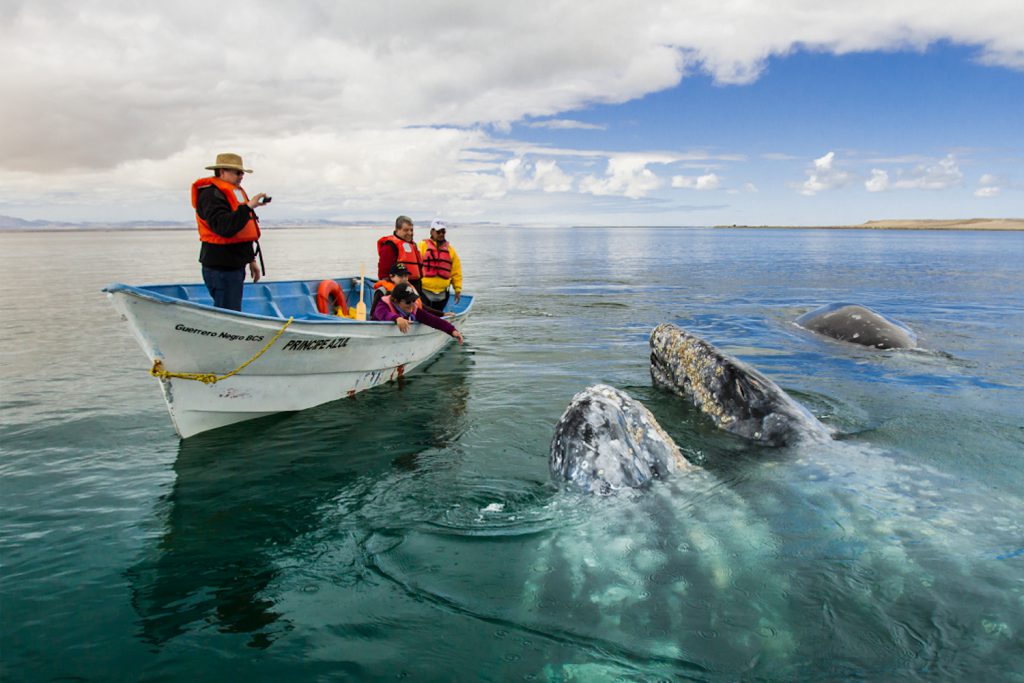
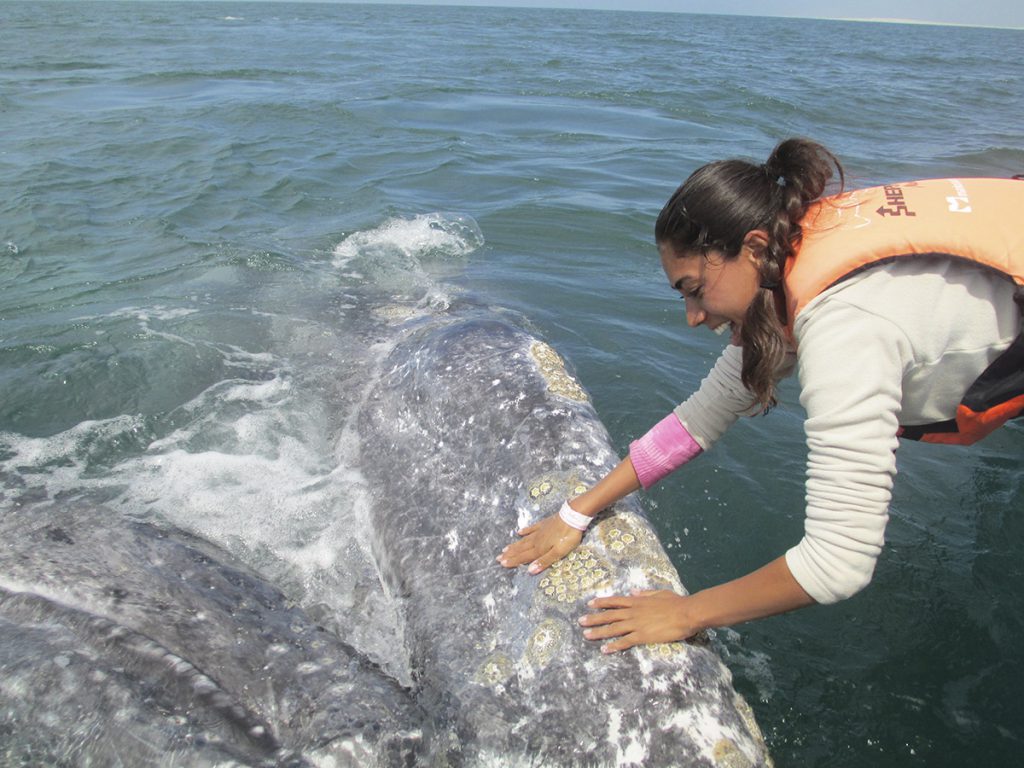
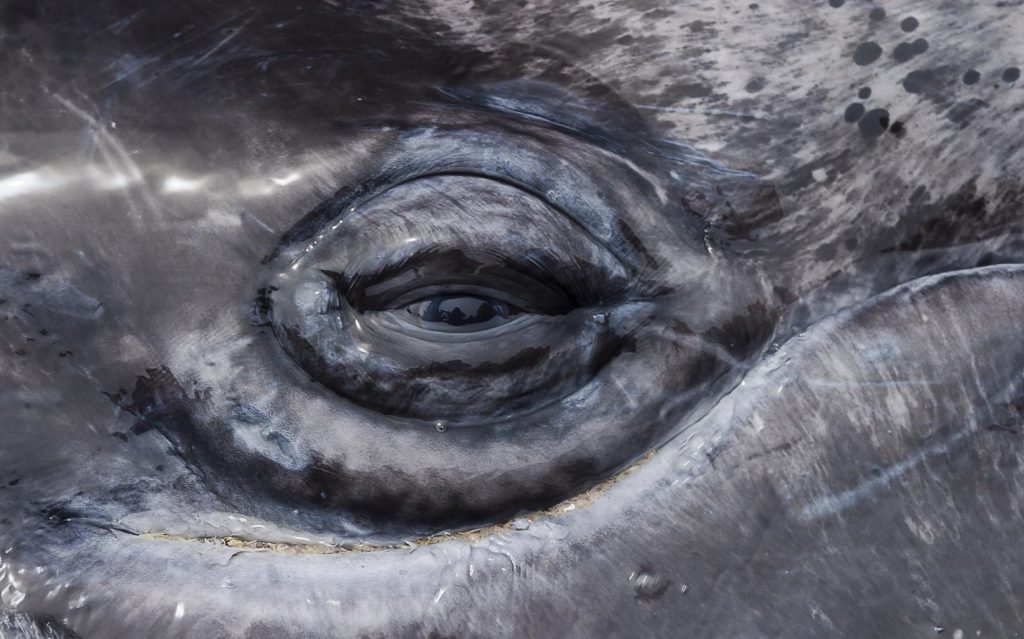
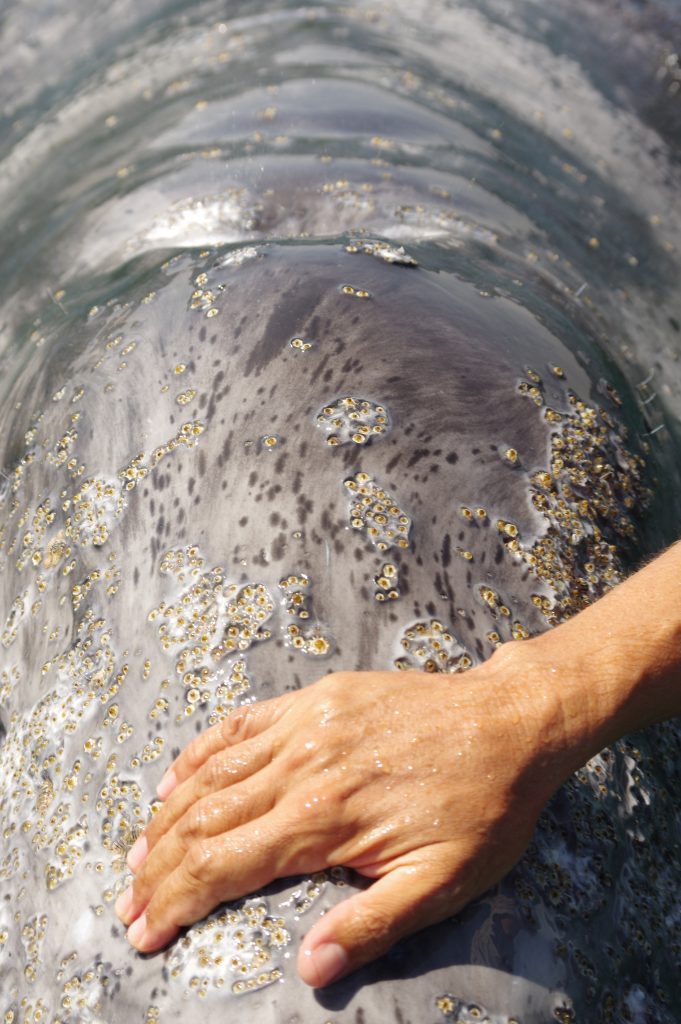
When I go out to sea, I always hope to see some specimens I already know. And sometimes it happens. But I don't say it, because no one would ever believe me. The "Manchada," the "Gorda," the "Despechosa," the "Blanca," the "Moncha," as the fishermen who pilot the boats call them, all recognizable by the easily visible spots or scars on their backs or by their strange habits. We arrive within the observation area after about 15 minutes at 20 knots, reduce the engine speed to idle, and wait, floating on the calm water. In reality, it's not us who are looking for them, but the other way around. Never follow a whale that shows no signs of wanting to be approached; it would dive and disappear. Suddenly, gray whales emerge around the boat, to the surprise and snapping of those on board. So I go to the bow, lean out, stir the water with my hand, and once again the miracle happens. Slowly, their enormous heads, covered in barnacles, barnacles, and other tiny crustaceans that live on the whale like an island, approach beneath the surface, only to resurface a few centimeters away. Contact occurs, I touch them, I caress them. Their skin is smooth and warm, like touching a dinghy. Beneath it are 12 centimeters of fatty fat, and you can see tiny hairs, an evolutionary legacy from their terrestrial ancestor, the Pachycetus. It's an incredible, indescribable sensation: a whale seeking a human's caress. It's clear they know they have nothing to fear here; it's clear they telepathically understand my thoughts, my admiration, my great respect for their great souls, my profound gratitude. They are wise animals, protecting other species from sharks; sensitive, intelligent, playful, with long and acute memories, close social bonds, vocabulary and dialects, and distinct personalities. They are much more similar to us than you might imagine. They're as intelligent as primates. I once saw one glide along the side of the boat and stare at the faces of four of us leaning against the edge at four different times: it was fully aware of our individuality, of our being human on a boat. It looked us straight in the face while it was thinking about us.
I remember that on several occasions I had tears in my eyes from such wonder. Despite everything we do to them, whales still seek us out, they trust us, they want us close. We are mammals, physical contact is essential to our lives; we love caresses and friendship. We need it for our mental and physical well-being. I've had the privilege of approaching them in open water, and even there, the same relationship: gazes, attentive movements, curiosity, bellies in the air like kittens.
It also happened last April in the Mediterranean, when a solitary young gray whale, just over a year old, named "Wally," inexplicably wandered our sea, 10.000 km from its native range. From the windows of her home in Baia, Nuccia Filomena Lucci watched the whale prowling in the shallow waters of the Gulf of Pozzuoli. She went down to the marina with her friends and, using an inflatable boat, tried to pull it away from the shallow coastal waters to prevent it from running aground. They came alongside, and it surfaced and looked Nuccia in the eye. Nuccia, seized by an uncontrollable primal instinct, caressed it. The approximately seven-meter whale showed no sign of being harassed and continued sailing alongside its new friends for a while before moving away towards open water. Nuccia contacted me online and wrote to me with concern, since many, including many experts, were attacking her for her innocent gesture. I replied that with her caress she had given the most beautiful gift possible to a lonely and lost whale.
The trust of a free-living animal is a precious gift; we cannot betray it. Nor can we assume that their carcasses are useful to humans, or continue to ignore the fact that much of the meat ends up in canned dog and cat food, labeled "animal fat." Everywhere in the world, we must oppose whale hunting or the capture of orcas and dolphins for captivity in every way possible. Do so whenever you have the opportunity, even if it's just with a simple online signature. Never go to dolphinariums again, but travel to see these wonderful free-living animals in their natural habitat. It's possible in Italy, too. Or come to Baja and you'll immediately understand why: touch a whale and the whale will touch your heart.