


The Baja California Peninsula is about 1.200 km long, the same length as Italy. To the west, it is bordered by the Pacific Ocean , to the east by the Sea of Cortes , the San Andreas Fault, which separated over 25 million years to form the deep Gulf of California.
Marine environments: two worlds compared
Two completely different marine environments in terms of salinity , temperature , tidal ranges, and conformation. Water temperatures range between 19 and 21 degrees in the Atlantic Ocean , with a salinity of 36‰ compared to the average of 38‰ in the Mediterranean , slight tidal ranges, almost constant wave motion, low sandy coasts, and the absence of coral.
In the Sea of Cortes, on the other hand, we find sea water temperatures of 21-31 degrees (!), 35‰ salinity, tidal ranges of up to 7 meters in the far north of the gulf, rocky beaches and coasts, the only coral reef in the Northern Pacific and mixed seabeds that are home to 900 catalogued species compared to approximately 750 in the Mediterranean.
Unmissable diving spots: among wrecks and marine life
There are at least seven diving spots that I consider unmissable, all concentrated in the South , but it is really difficult due to the distances between them to be able to see them all during the same trip , this also due to the different periods of the year that make them preferable.
The Revillagigedo Archipelago, better known for its main island, Socorro , deserves a separate trip . This archipelago of four islands, 500 km from the tip of the long Mexican peninsula, represents, along with the Galapagos, Cocos Island in Costa Rica, and Malpelo Island in Colombia, one of the four best pelagic areas in the world for spotting marine megafauna. We'll discuss this exciting liveaboard cruise in another article.
1. The Seawolf wreck
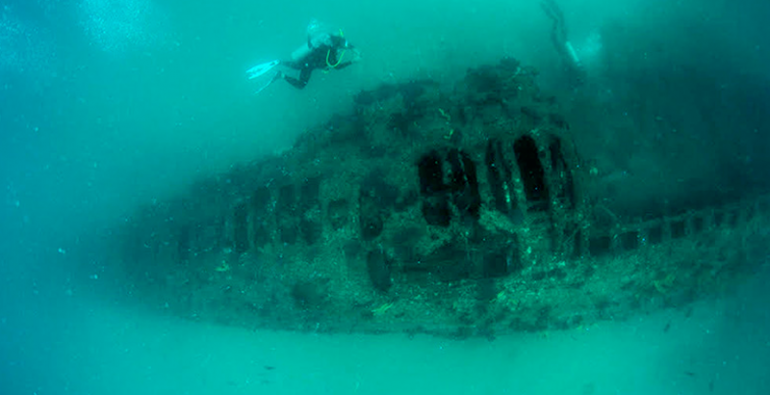
Our first dive in Baja begins in the Pacific, outside the immense Bahia Magdalena. In 2016, I read in a bulletin that the Mexican National Institute of Anthropology and History had received a report of a wreck surfacing from the seabed at 15 meters of depth west of Isla Margarita. I immediately called a friend in Puerto San Carlos. He farms oysters and takes tourists whale watching. He told me it was fresh news and that it was a submarine. To everyone's surprise, it was a submarine over 100 years old, the USS H-1, which was returning to the dockyard in San Diego at the end of World War II.
The story of the Seawolf wreck
Built in 1909, the small, 40-meter-long Seawolf , after passing through the Panama Canal, was heading north, just off the Mexican Pacific coast, in the winter of 99 years ago. A storm caught her off the coast of Baja California, and the captain, having lost control, ordered the crew to abandon ship. Of 25 sailors, only 20 reached shore.
The wreck dive
Today, the Seawolf lies on its port side on its white sand bed, almost intact except for the aft turret, open to the rest. An easy and fascinating dive: there are still torpedoes, ammunition, and countless details of the bridge and interior that the ocean miraculously spared for a century. The swell kept it covered in sand for decades, and the structure has remained well preserved without falling to pieces.
2. Finisterra: where the underwater adventure begins
There is n't much else to see here on the Pacific , so we head south to Finisterre, as 16th-century Spanish cartographers called the southern tip of the peninsula.
Here, beneath the imposing granite stacks that constitute the last strip of land from California and form the famous natural arch of San Lucas, on a 30-meter-deep sandy seabed lie the pieces of the German cargo ship Lundemberg, which in 1954 was transporting gypsum from the Sea of Cortes to California.
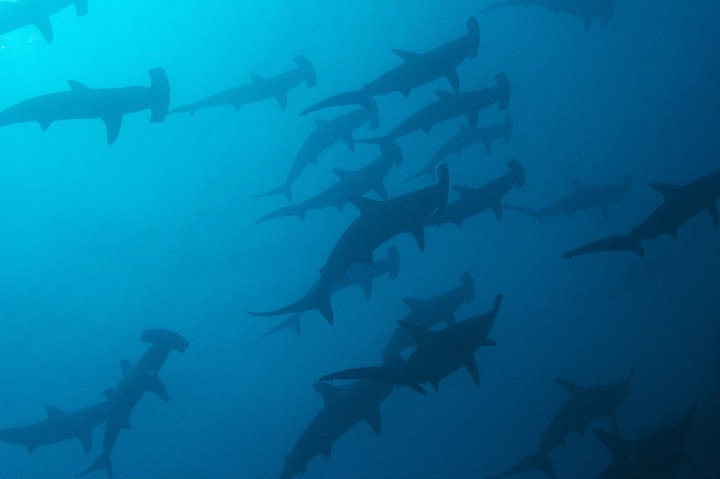
Among them, sea lions from a small, resident colony nestled beneath one of the rock towers, circling. Large schools of sea lions, a type of sea lion widespread in the Bay of Baja, can also be seen, as well as angelfish, surgeonfish, lobsters, giant manta rays, mobula rays, and, deeper down, large snappers and, with a bit of luck, even whitetip sharks and hammerheads.
Finisterre geographically divides the Sea of Cortes from the Pacific, so we find reef fish alongside pelagic species. There's also a cave. Just 1000 meters from the last sea stack, the seabed drops steeply to -600 meters. I know people who have also seen rare deep-sea cow sharks and oarfish at about 5 meters, a deep-sea ribbon species, as well as humpback whales and killer whales hunting sea lions.
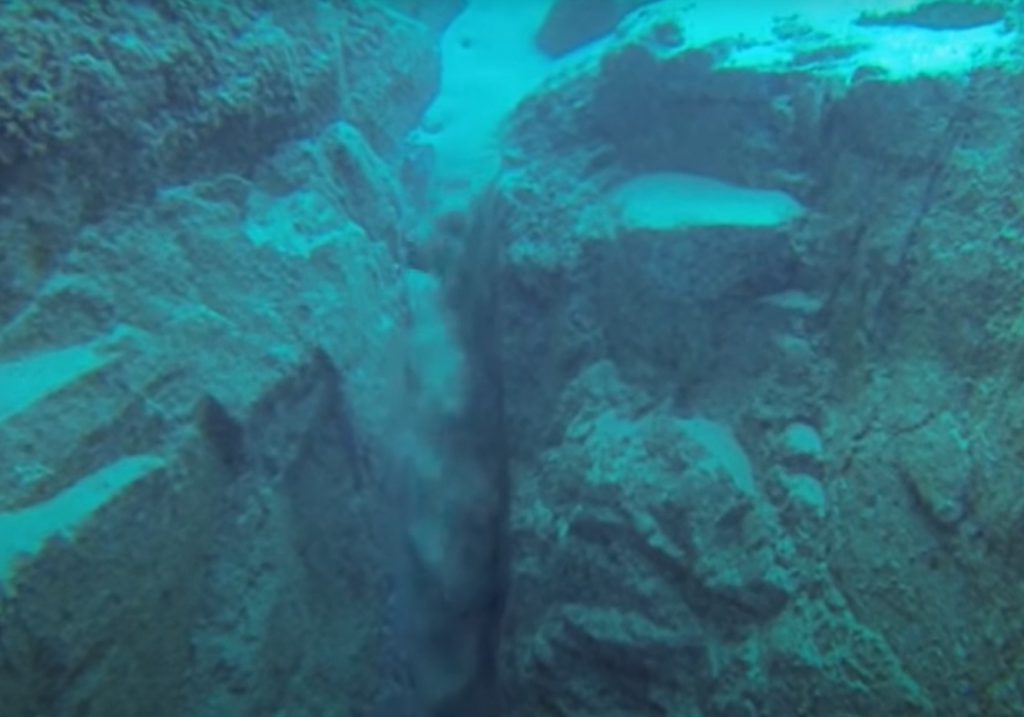
The “Cascadas de arena” in Finisterra
But the site's real attraction is the famous " Cascadas de arena ." The Pacific waves pile up sand on Love Beach, a beautiful golden stretch of sand lapped simultaneously by the Atlantic Ocean to the west and the Sea of Cortes to the east. Currents and wind slowly transport and pile up the sand toward the east, and like an hourglass, millions of grains of sand slide down the vertical rock face that plummets to the bottom, creating a stunning optical effect. It's like watching waterfalls in slow motion, a phenomenon that's difficult to capture on video given the sheer size of the face , the number of streams, and the sometimes-uneven visibility.
3. Bahia Chileno: a rich and dynamic marine ecosystem
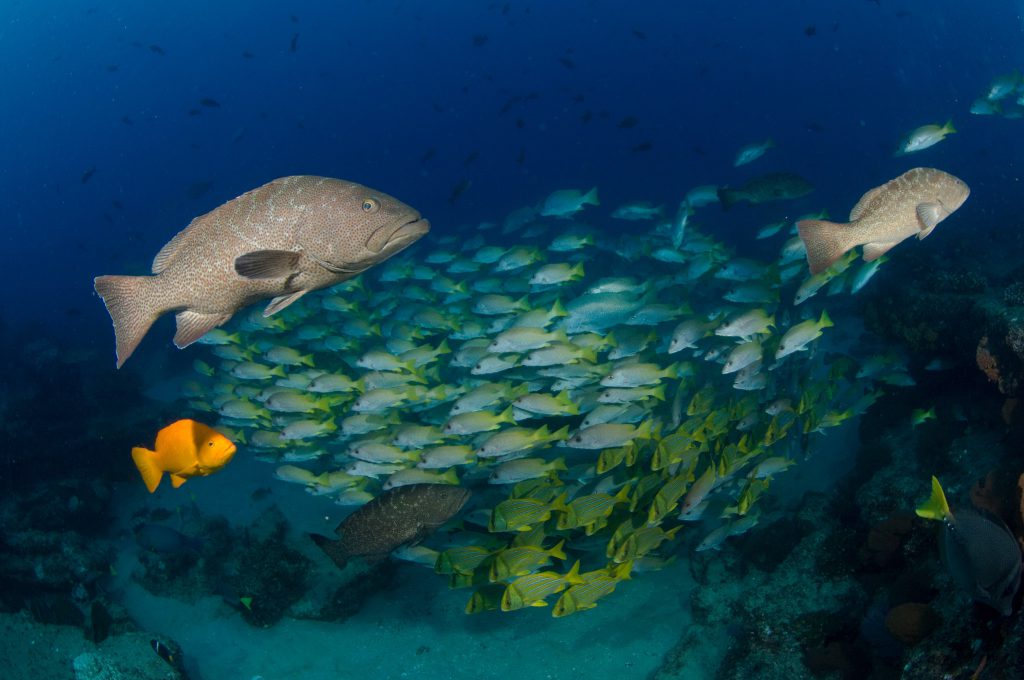
To see the third site, you're just a 10-kilometer drive or a 7-mile sea voyage. The exposed reefs of Bahia Chileno are surrounded by a seabed just 18 meters deep, with little color, but there's always plenty of activity underwater. Dozens of coastal species incessantly bite rocks and corals , making a crackling sound much louder than elsewhere. Their teeth shatter the reef, cleaning the coral of algae and creating fine white sand with their waste. In summer, large turtles and groupers often wander here, about a meter deep ; in winter, it's hard not to spot humpback whales along the way or hear the males calling underwater . A beautiful dive.
4. Gordo Banks: For more experienced divers
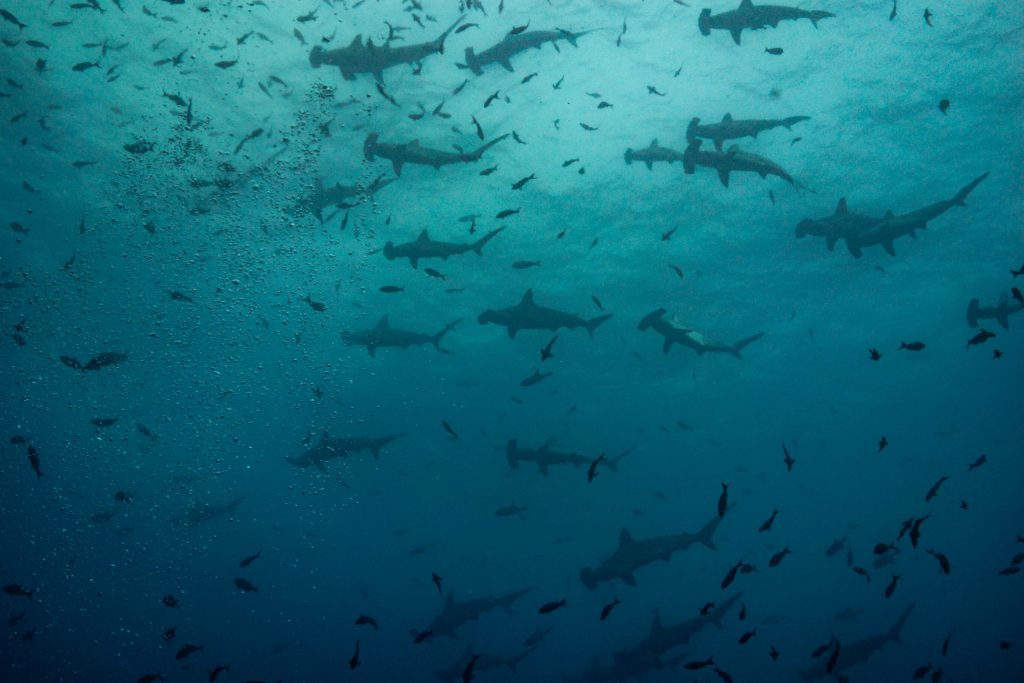
We then head to Gordo Banks , a popular destination for many divers who often return disappointed. Ten miles off Marina Los Cabos , two shallows rise from a depth of 150 meters, reaching to within about 30 meters of the surface. Visibility varies , even from day to day, and the current is often strong, uncomfortable, and tiring , especially if you want to stay within sight of schools of hammerheads, tuna, veritable flocks of hundreds of devil rays, as well as marlin, large wahoo , amberjack , dorado (the beautiful, brightly colored oceanic dolphinfish), and more.
A rather static and challenging dive , reserved for expert divers who don't risk becoming disoriented and lost in the blue and can safely return to the surface on their own. Due to the highest probability of good conditions and visibility, it's best to do it only between May and December , when the shallows promise some great thrills. It's also worth considering that all operators require at least an advanced course and a previous dive with them to take you to Gordo Bank.
5. Cabo Pulmo: The only coral reef in the North Pacific
From here we travel to Cabo Pulmo , located exactly at 23 degrees north of the Tropic of Cancer , a pleasant two-hour drive from San Jose del Cabo, home to the only coral reef in the North Pacific . A peaceful, desolate, yet enchanting place, reached after a final 10 km of beautiful, rocky dirt road that could put a normal vehicle to the test.
Cabo Pulmo between January and April can often be disappointing due to highly variable visibility conditions, which can change radically in just a few hours, reducing it to just 5 meters due to clouds of plankton or a very fine suspension caused by northerly sea currents that do not always coincide with predictable tidal flows.
National Geographic Certification for Underwater Heritage
A study published in 2011 by National Geographic argued that this coral reef, first explored by Commander Cousteau , should be considered the best in the world in terms of conservation status , average fish size, and number of resident species. There are in fact several hundred of them, including reptiles, echinoderms, sponges, fish, mollusks, crustaceans, and cetaceans.
Jacks and sharks at Cape Pulmo
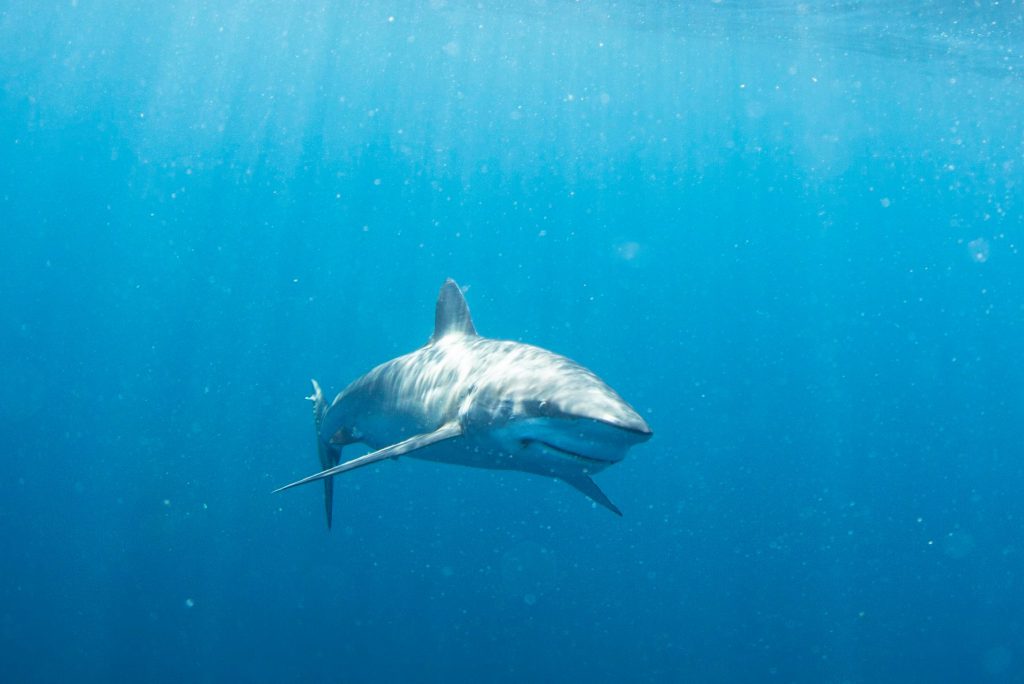
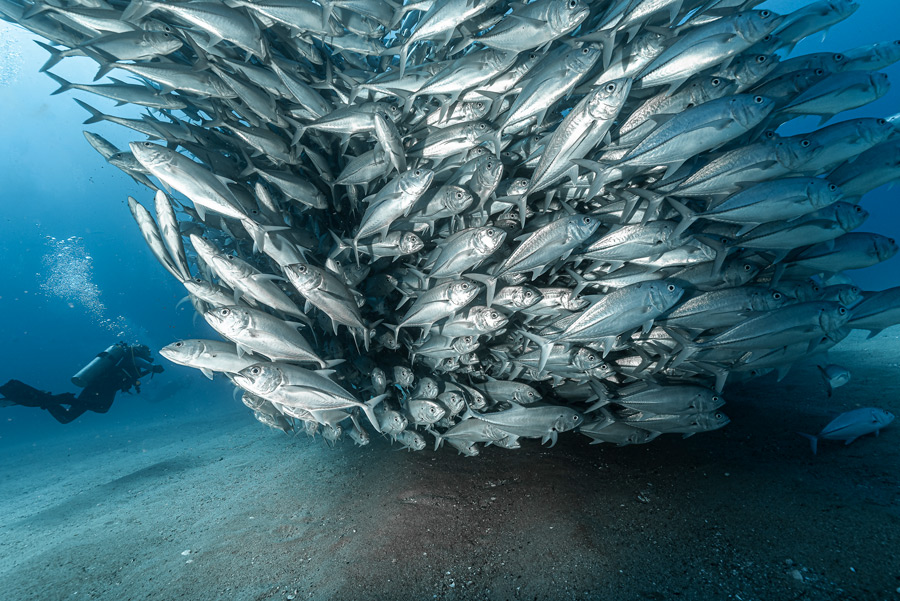
Among the pages of the article, I was surprised by a photo of a tiny diver in the presence of a school of hundreds of large jacks. This photo has now become famous, replicated by all the divers who visit the park given the almost constant presence of these large schools. This enormous biodiversity also includes six species of sharks, including tiger sharks and large bull sharks over 3 meters long.
6. Diving at La Paz Bay: Encounters with the giants of the sea
Now let's head to La Paz , the small and charming state capital. La Paz Bay is best known for the presence of enormous whale sharks between October and May , which orbit here to feed on plankton and large cannonball jellyfish ( Stomolophus meleagris ), which they swallow like Pac-Mans. Avid divers would do well to forgo scuba diving for a morning so as not to miss out on this unforgettable experience, best enjoyed with just mask and fins: sharks ranging from 4 to 8 meters slowly prowl the sandy bottom at 4 to 6 meters, providing excellent conditions for photography and videography.
Salvatierra: Tragedy Transformed into Marine Wonder
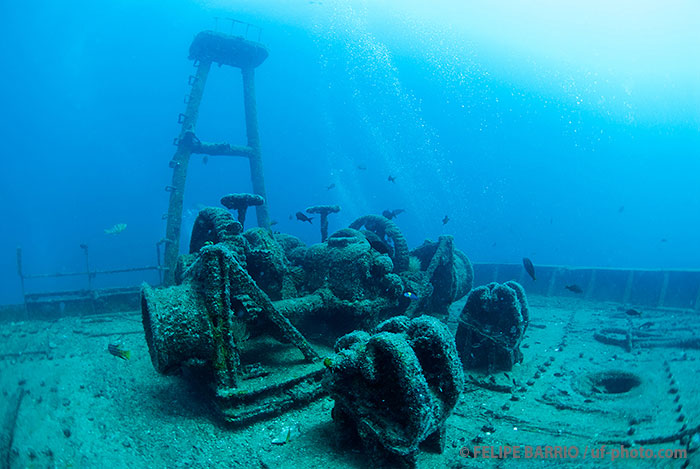
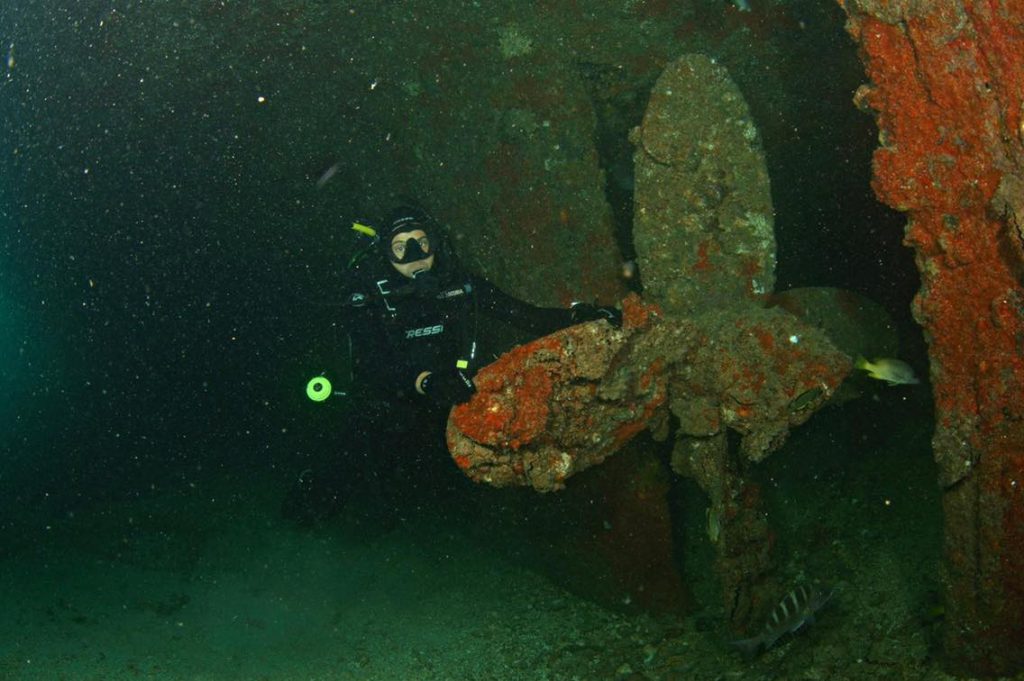
We set sail from La Paz with an Englishman who has lived here for 20 years. We first reach the wreck of the twin-propeller passenger ferry "Salvatierra ," built in 1942 in the United States to transport weapons and soldiers during the war, now lying about 18 meters deep off the promontory to the north-east of the bay. A 90-meter-long and 15-meter-wide ferry, with exposed 2-meter-diameter propellers , it is surrounded by tankers and crates still full of who knows what.
In June 1975, while crossing the channel separating the bay from Espiritu Santo Island, a sudden leak on board forced the vessel to be abandoned with all its cargo. A plaque on the deck commemorates that day, remembering Captain Rogelio Efraín González Arreola, known as "El Pistola," perhaps due to his carelessness during navigation. A thought that makes me smile underwater and will make all Milanese divers smile...
Today, the Salvatierra is teeming with schools of stingrays, groupers, moray eels, corals, starfish, shells, and seahorses . A project by the Department of Marine Biology is transplanting coral right here, with good results. I've even seen hammerhead sharks slowly prowling here . A tragedy that the sea has transformed into wonder.
7. El Bajo: Pristine Pelagic Sanctuary
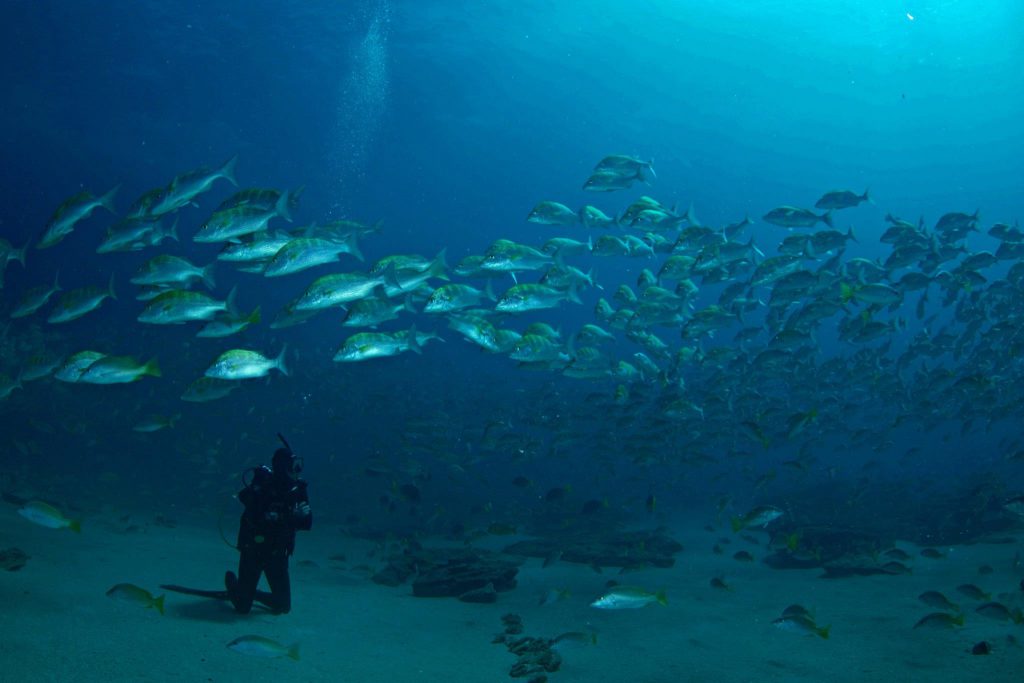
We continue to El Bajo , a 20-meter pelagic reef six miles from Isla Partida. Hammerhead sharks, giant manta rays, dolphins, marlin , and once even a school of 30-40 pilot whales . Another time along the way, a school of sperm whales , unmistakable from afar due to their characteristic oblique blows. A pristine sea, still untouched by human impact and the massive presence of divers. Groups rarely reach 10 people in total, and often the boat we set sail on is the only one at the dive site.
8. Isla Espiritu Santo: the pearl of the Sea of Cortes
We'll end on a high note with the pearl of the Sea of Cortes: Isla Espiritu Santo , practically the reason I live here, the place that made me fall in love with Baja California. Here, granite rocks and pink pumice plunge into a rare, transparent emerald sea. The island, a UNESCO World Heritage Site , is home to the largest colony of sea lions in the entire gulf . Around 400 live on El Islote, a large reddish basalt rock rising from 30 meters of coral seabed, its peaks covered in white guano as if they were snow-capped.
As you dive among colorful hard and soft corals and countless tropical fish and starfish, charming sea lions will entertain you, nipping at your fins and peering curiously through your mask. Playful as puppies, some will even seek your caress. A unique and joyful experience, a natural and spontaneous interaction without harm to anyone.
We emerge from the water after these eight beautiful dives with our eyes full of memories and our hearts beating for having seen with our own eyes that here, despite everything, the sea is still alive.
Marine Conservation in Baja California: A Model for Global Sustainability
The coral in the Baja is still unaffected by bleaching, marine life ignores human presence, where it doesn't seek it out for social interaction, and the seabed, according to many scholars, has remained unchanged for thousands of years. Far-sighted protection projects are protecting these wonderful sites, ensuring their integrity through the imposition of maximum daily visitor numbers, mandatory entry fees that are invested in conservation, mandatory life jackets for snorkelers, the use of biodegradable sunscreen, fishing bans, Coast Guard monitoring, coral transplants, and ongoing environmental studies.
Baja California: A Diving Destination to Discover
Underwater Baja California is unknown to most divers around the world, but it deserves to be considered one of the miraculously best-preserved places in the world. A harmonious and balanced underwater world, a sought-after destination for few, expensive, with varying conditions throughout the year, requiring technical expertise from the diver, and on which little photographic documentation and scientific literature exist.
It is best to visit in summer, especially between October and November , when diving into the warm, clear waters of the Sea of Cortes, which still hover around 27-28 degrees, will give you the impression of diving into an immense tropical aquarium, as Jacques Cousteau, who was the first to film its depths in 1974, dubbed it, and was amazed by its incredible biodiversity.
Holidays in Baja California with Diving Destinations Tour Operator
Underwater Destinations, tour operator specializing in diving holidays, can guide you with its operators in choosing your ideal holiday thanks to a direct knowledge of the Baja California.
It has been offering packages for years travel and Diving cruises for groups and individuals, as well as the possibility of designing and preparing specific land-sea travel and photography programs customized upon request.