





Author: Sergio Loppel
Today, in the age of color, it almost seems
it is anachronistic to cite black and white as the vector of a visual message
fact, or of a situation, or of a story.
Especially if we depend on the stereotype of the general imagination, the
black and white photography almost always suggests a motivation
question that leads us to stop and observe it more carefully.
There is no doubt that color in photography enchants with immediacy; that
satisfy in its completeness for the whole image.
Black and white, on the other hand, is more critical and forces us to have greater depth
of synthesis.
In fact, B&W photography leads us to a more careful analysis of the image,
where the graphics created are those that enhance the shades of gray.
Perhaps black and white photography should be more properly called
photography of grays. In fact they are the innumerable shades of gray
those that create such an expressive atmosphere, thus allowing
evaluate the particular depth of the planes, thus enhancing the acquisition
visual, and therefore, generating the emotional one.
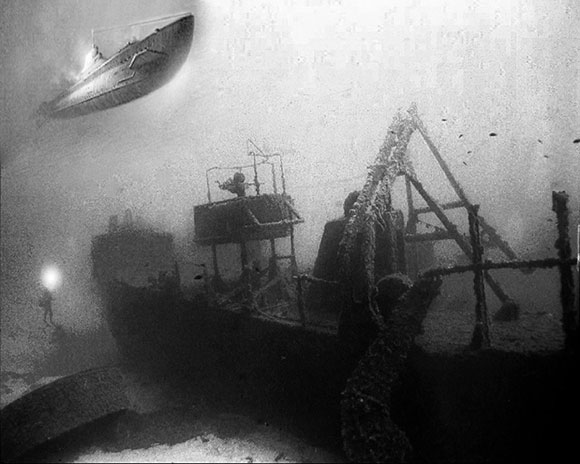
Black and white photography has the advantage of having
a combination of advantages: it is simple and complex at the same time.
It is natural and unusual, it is emotional and impassive, it is above all rude and
refined at the same time.
I was born with black and white photography and like all photographers,
at the advent of color I was dazzled and dragged into the vortex of
chromatic tones. But out of a conscious and residual necessity, I have never
I've abandoned the habit of focusing on contrast. In fact, I think it's
precisely the gift that our eye possesses: that of perceiving intensity
of light, which helped me, through the perception of color, to
understand the gradations of contrast.
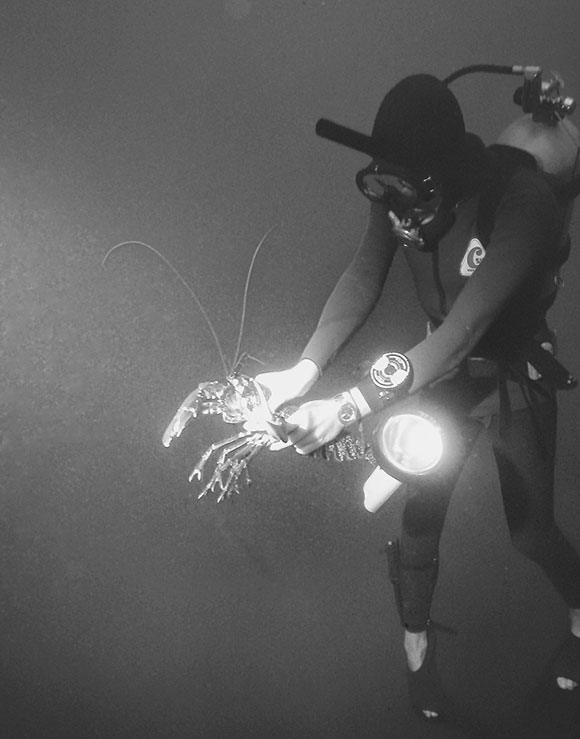
In fact, if we eliminate the color, it is known that our eye
increases perception and sensitivity to light.
Of course digital photography has given great help to photographers, especially
thanks to various photo editing programs.
And it is precisely these last ones that I have to thank for my photographs.
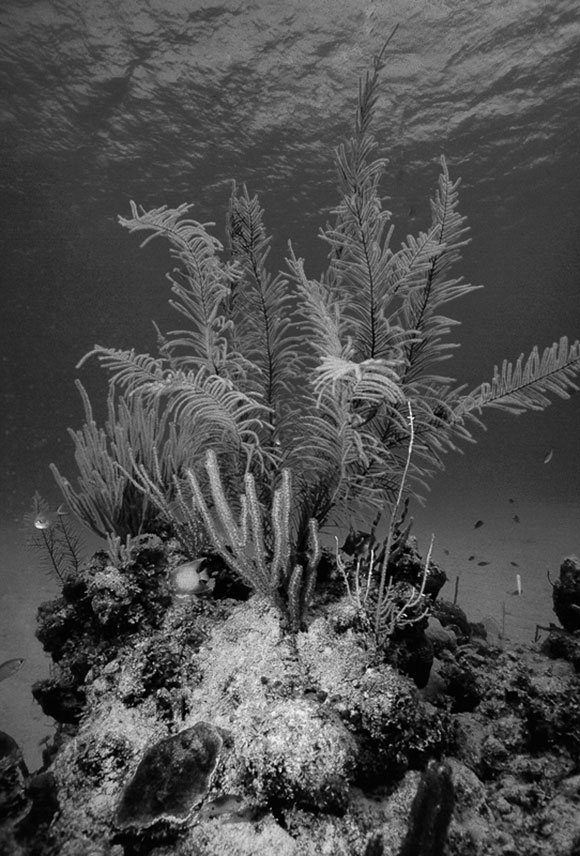
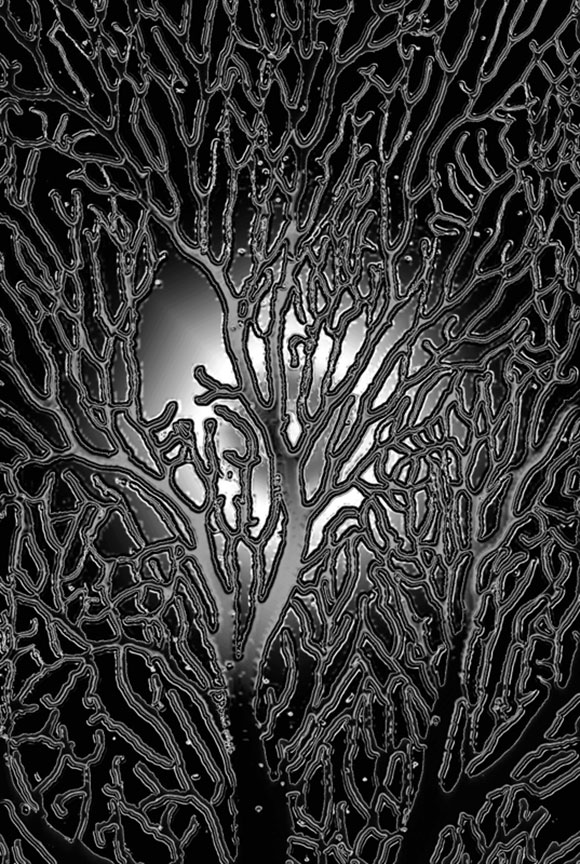
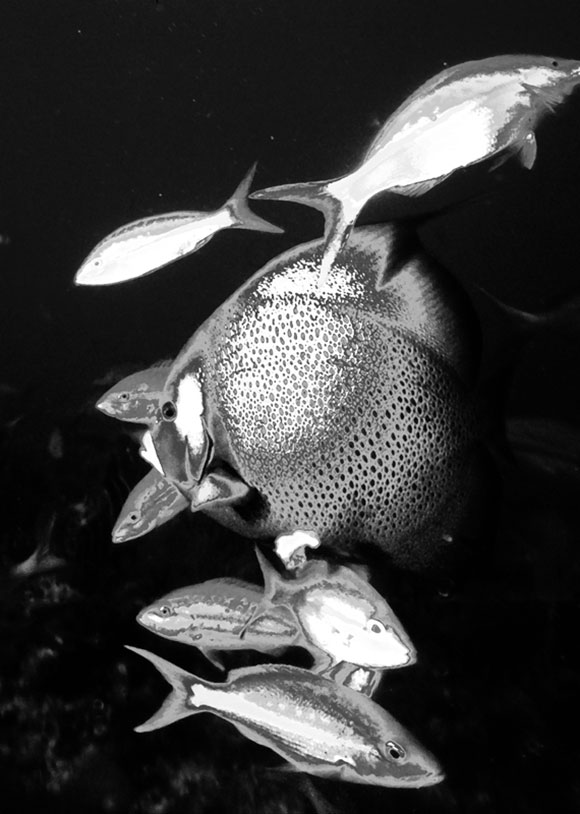
underwater.
Black and white has been a vast training ground for those who have
approached photography in the middle of the last century. And it still is today in
research and emotional evaluation of the image.
In underwater photography, however, black and white seems to have disappeared:
overbearingly swallowed up by the color that has taken on almost every aspect of it.
Yet, especially for the reportage photographer, black and white could
be the choice to significantly increase that dramatic sense to the
story that highlights the message, a message that is often more convincing
of words.
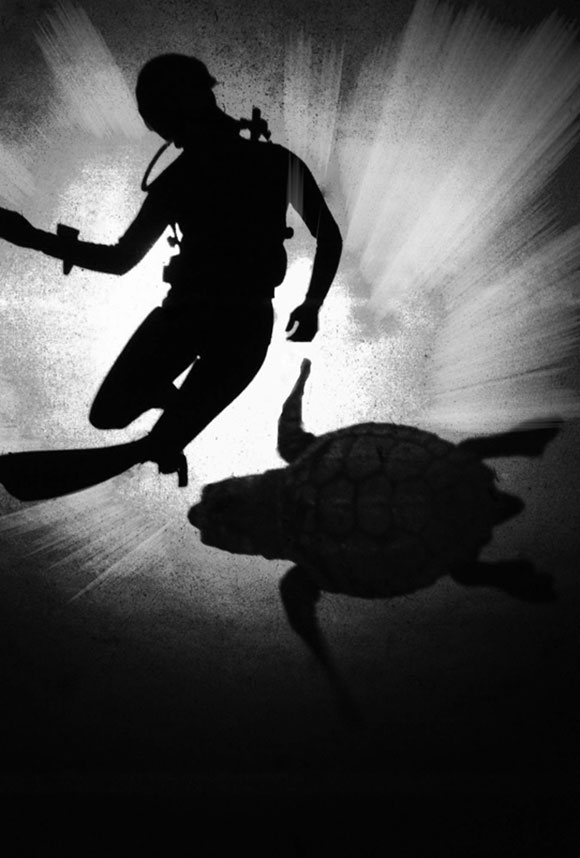
When dealing with photographic technique, we often forget to
to underline how black and white has the sensitivity to put in
highlights its departure from color photography, especially for that
abstraction technique that places him in the orbit of an existentialism
absolutely formal. One could even compare photography in
black and white, of course with the necessary distinctions, to an art form
three-dimensional, which highlights, as happens in painting, the
addresses of the various artistic currents.
I believe that underwater photography could gain a significant boost
from its evolution, of course if the photographer arrived at the dialogue
of the image, thus making it easier for interlocutors to reach
of interpretation.
And in this regard I would like to underline how photography, in general,
is a medium that allows you to communicate with others without the need
of the word, while the photographic interpretation is the personal expression
which imposes the dialogue of the word.
Other photos
Reproduction is strictly prohibited, even
partial, of the text and images in this article without the author's consent.